
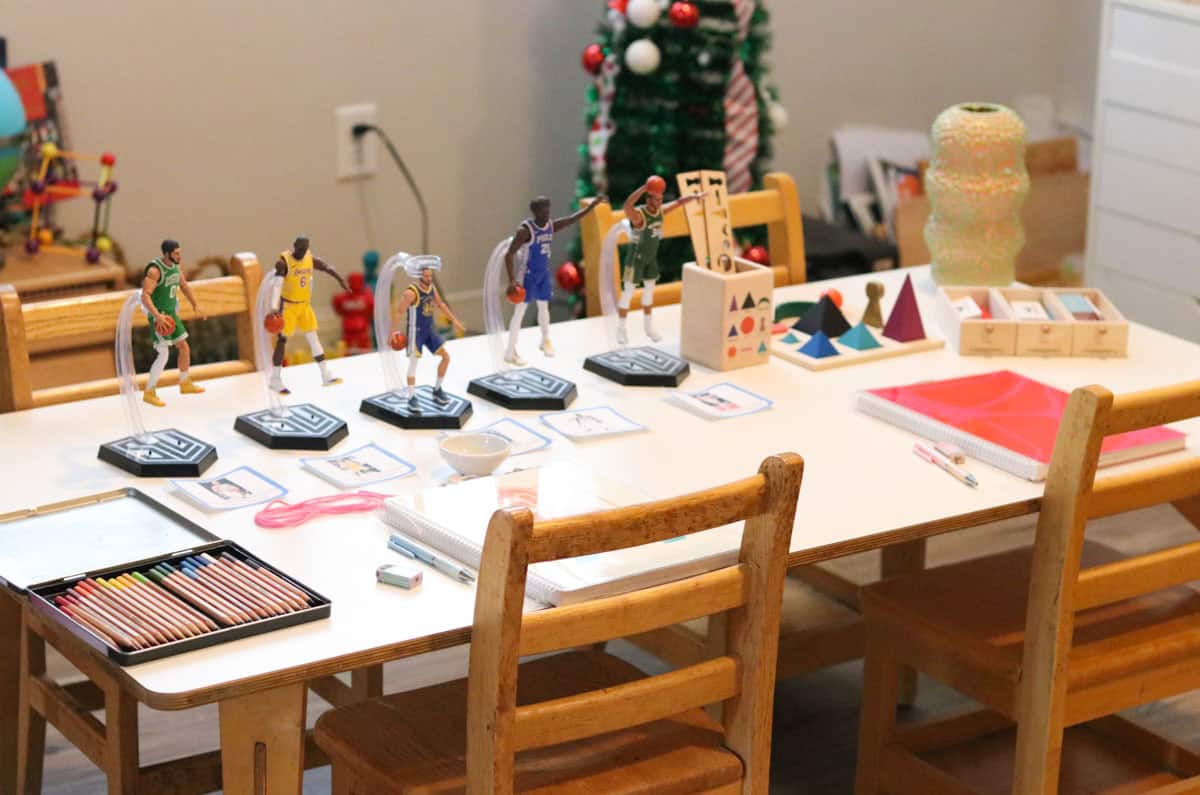
"Montessori education is designed to awaken interest and allow children to pursue learning about issues that already personally interest them. This is a natural corollary to a system of education based on choice: One chooses to do what one is interested in doing. Interest naturally leads to sustained intrinsically guided engagement, which develops attention and concentration. It is also necessary to a system that is based on intrinsic motivation, rather than on extrinsic motivators such as grades...
One role of the teacher is to connect the child to various areas of the curriculum through the child's personal interests."
- Angeline Stoll Lillard, Montessori: The Science Behind the Genius
Does your child get excited by the thought of Language Arts or grammar lessons? That's what I thought.
What if the lessons included captivating stories and materials that interested them? They probably wouldn't be jumping for joy, but the thought of it wouldn't be unbearable, and they may discover that they actually enjoy the work.
Below are some examples of elementary language lessons (mostly grammar) that we've enjoyed since becoming members of Montessori Tube Academy's Inclusive Club, and we think other kids might enjoy them too.
Jump to:
Montessori Tube Academy
The grammar lessons seen below are either directly from or a slight variation of the lessons from Montessori Tube Academy's Inclusive Club, depending on what materials we had available to work with in our home.
All of the printables are from Montessori Tube Academy and are included with the membership, along with video tutorials of the presentations and lesson plans for each month.
This is your vault to have access to all Montessori resources for different age groups. From step-by-step video lessons to lesson plans and printables we have got you covered.
85% of our existing members are either working in a Montessori public or private school, in a school with no Montessori mentors, homeschooling with Montessori, or even just inspired by Montessori and want to get started. Those are the members who find value in every part of this program.
While 15% are experienced Montessori teachers in all planes of development or just one age group. For experienced teachers, they find the videos the most valuable component of this program.

it's all related!
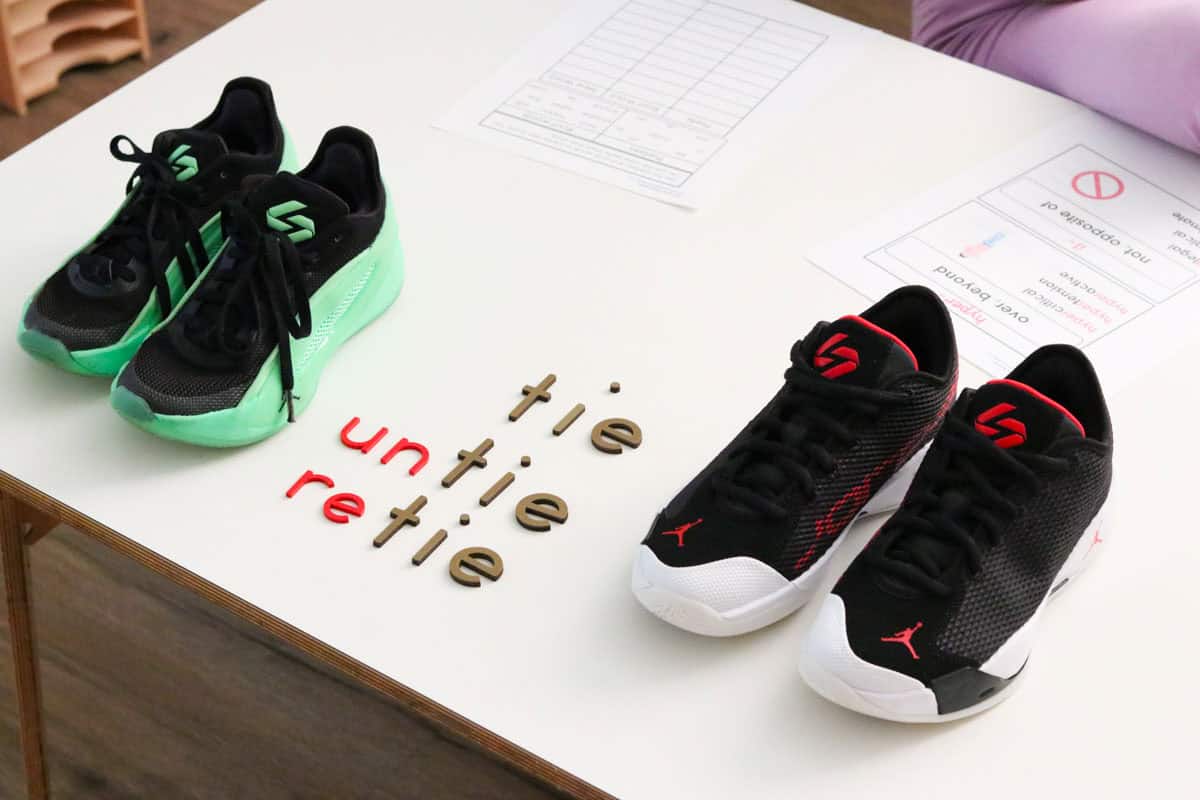
How to Tie Shoelaces
Grab your favorite kicks, because we're gonna show you how to tie shoelaces. Use the practice to score points in more than 1 subject.
related recipe!
Upper El Math
Find the materials, the printables, the book, or the supplier for your needs.
Elementary Language Lessons
Proper Adjectives
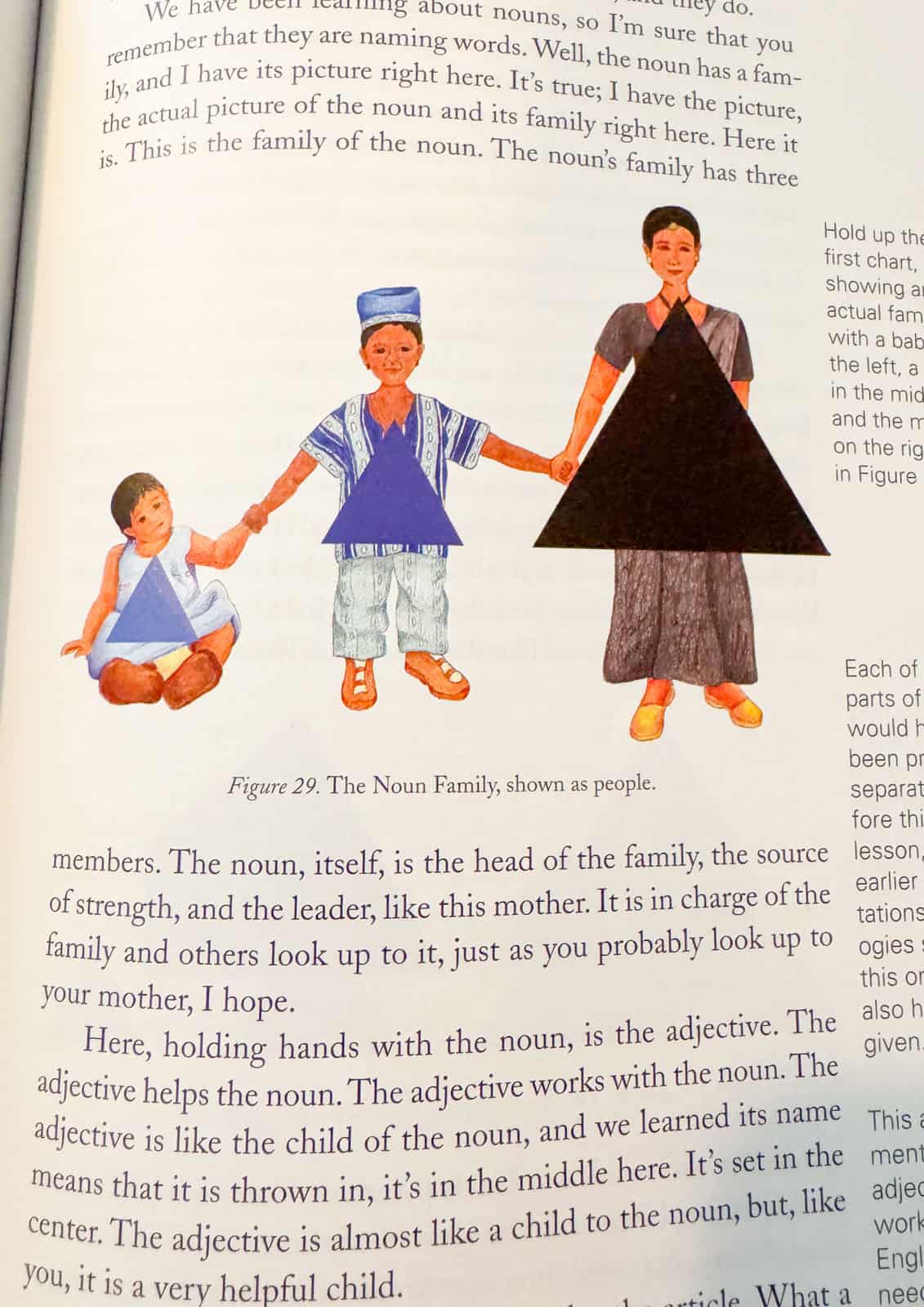
In The Deep Well of Time, kids are introduced to the noun family: the article, adjective, and noun. But do you know what a proper adjective is? A proper adjective is special!
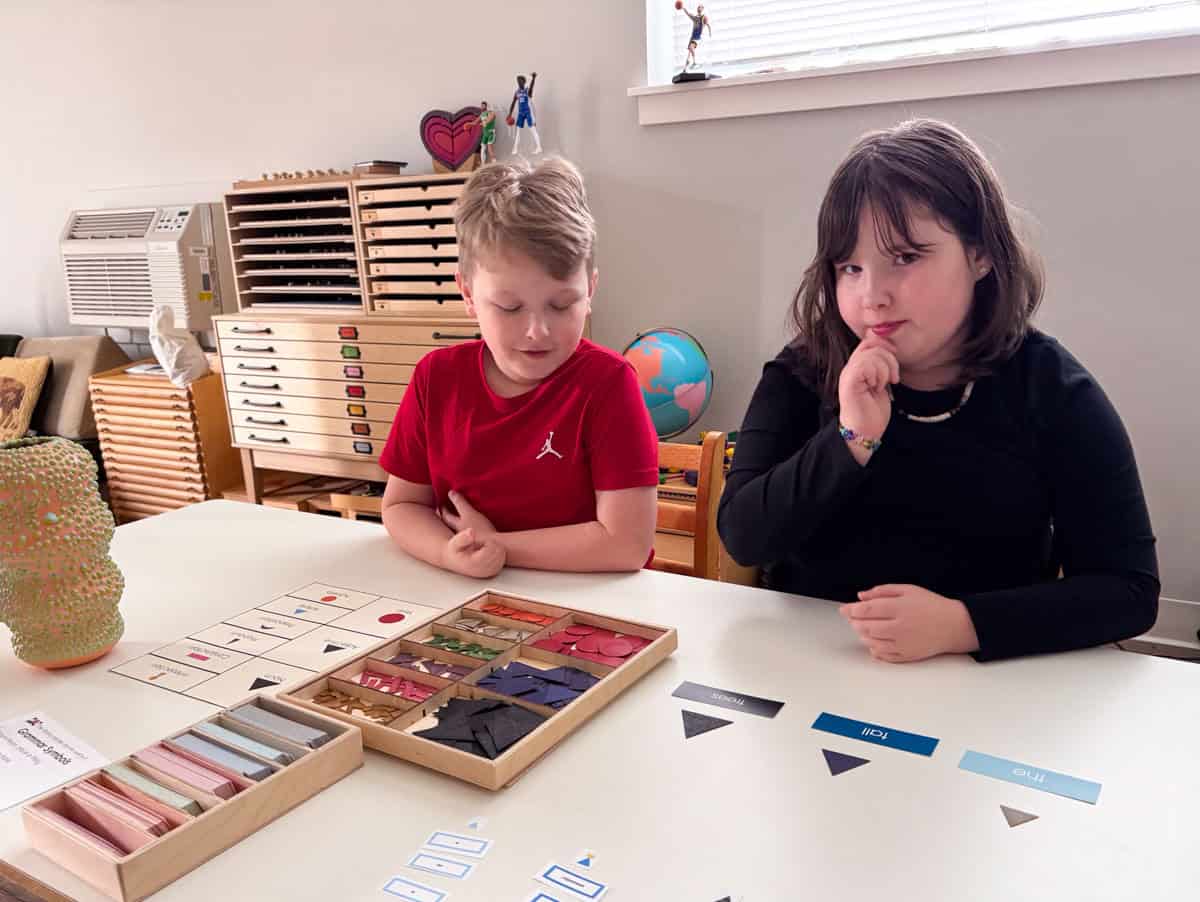
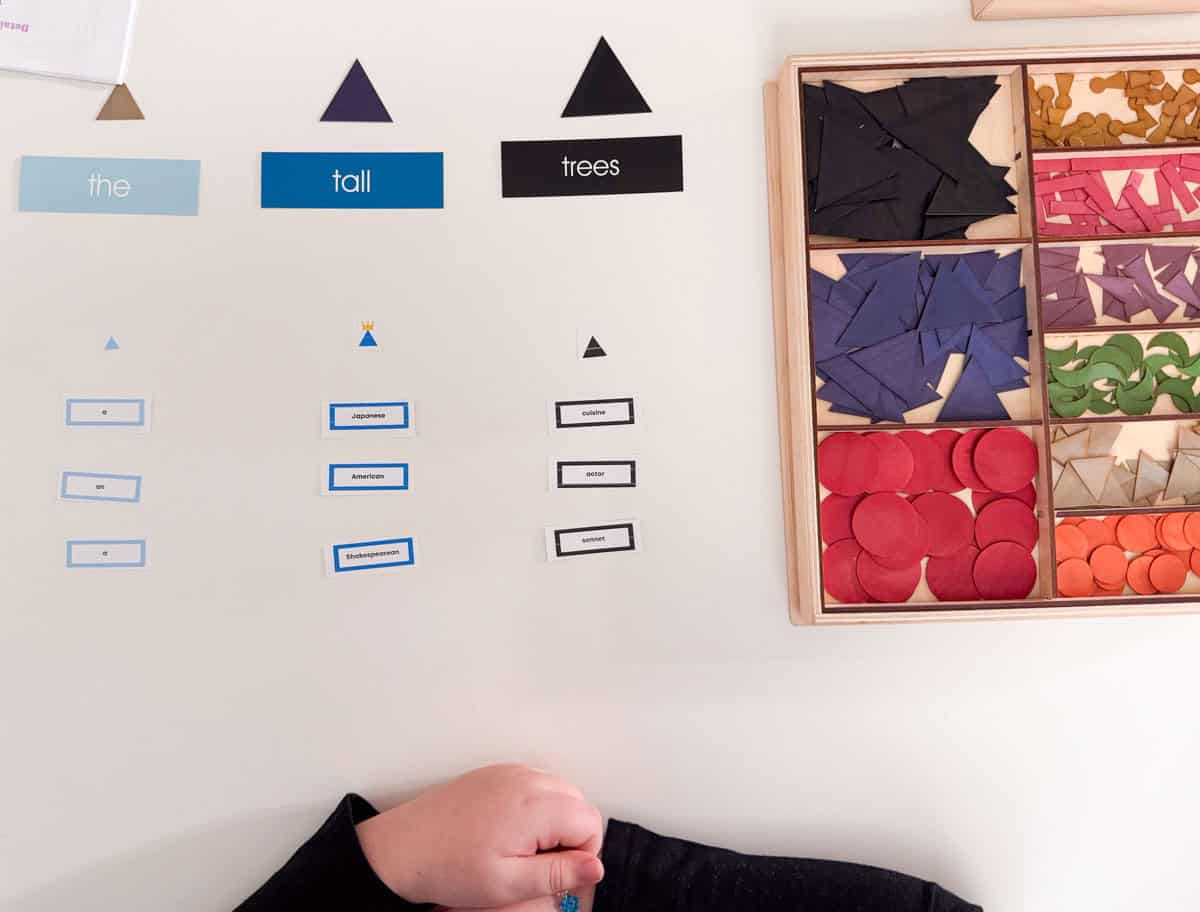
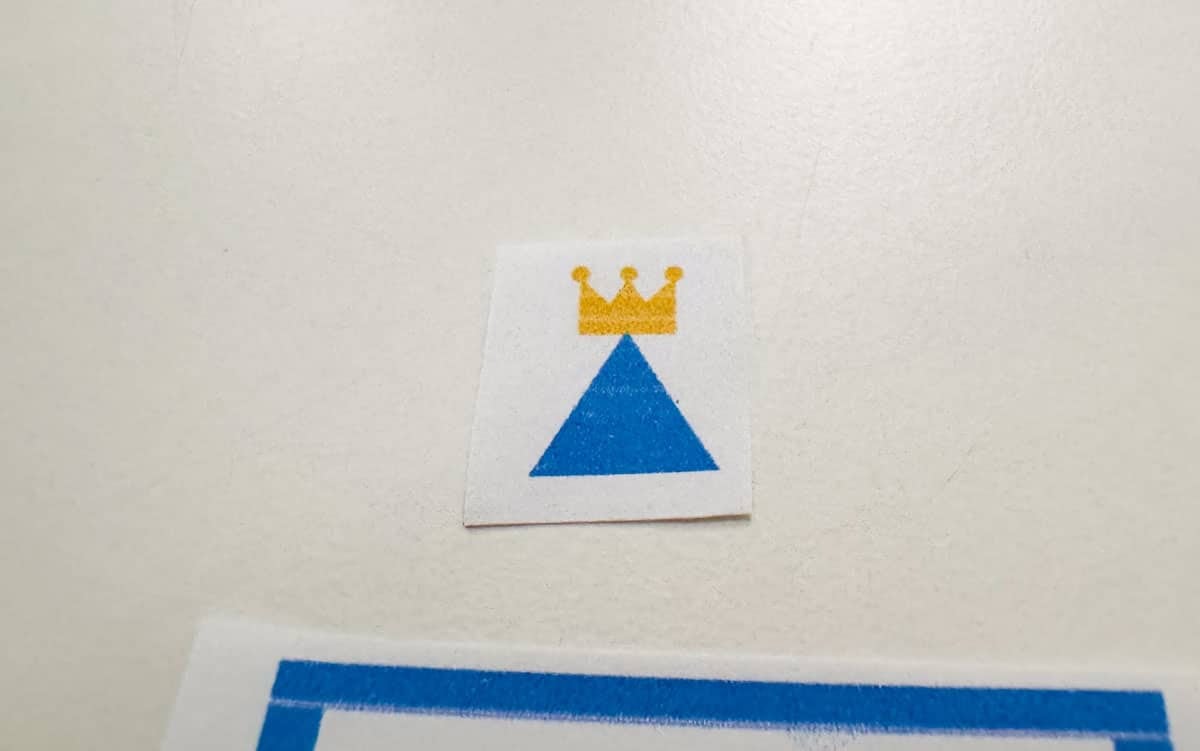
Proper adjectives start with a capital letter, and we symbolize them using an adjective symbol with a yellow crown. Can you think of phrases or sentences with proper adjectives?
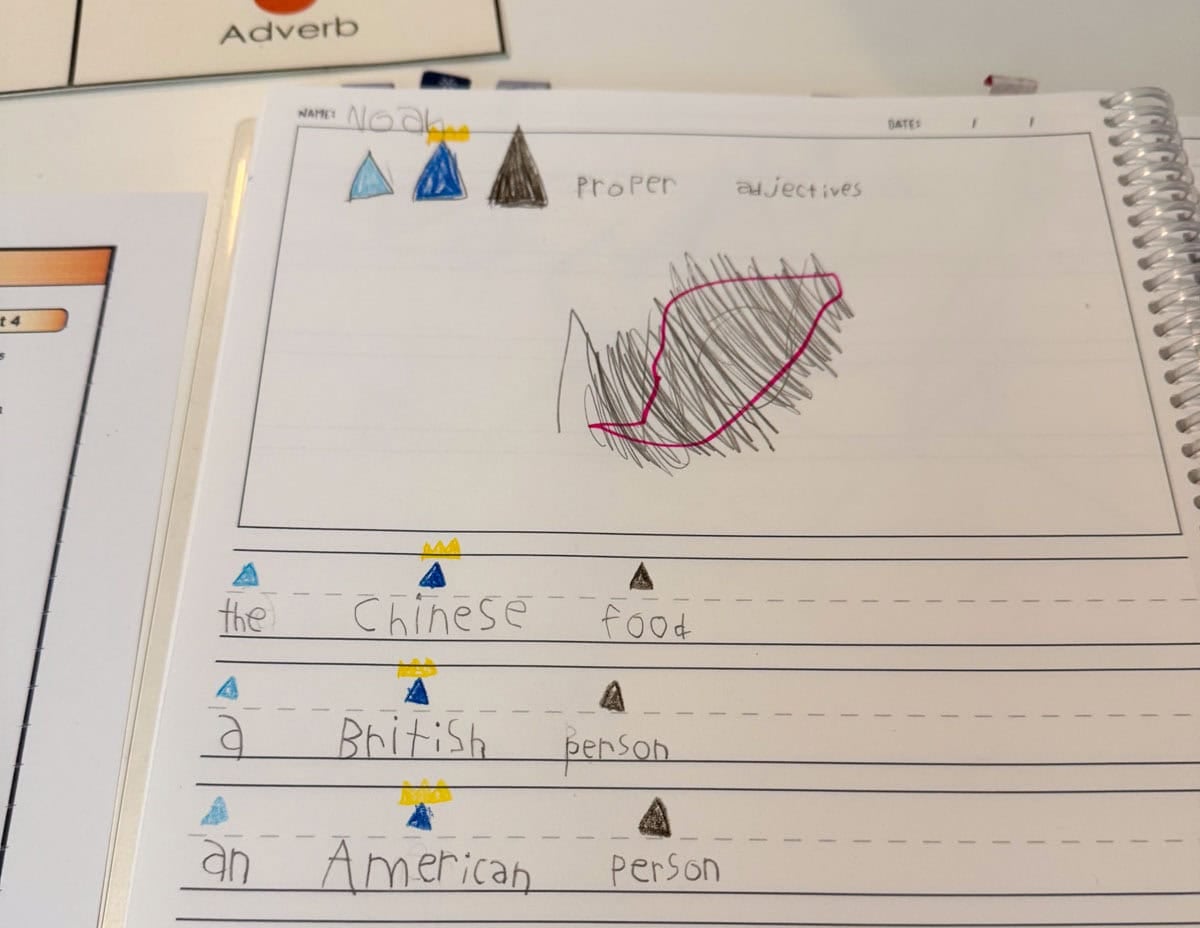
Write them down, and use the grammar symbols or draw your own. Don't forget to check your work!
Possessive Adjectives
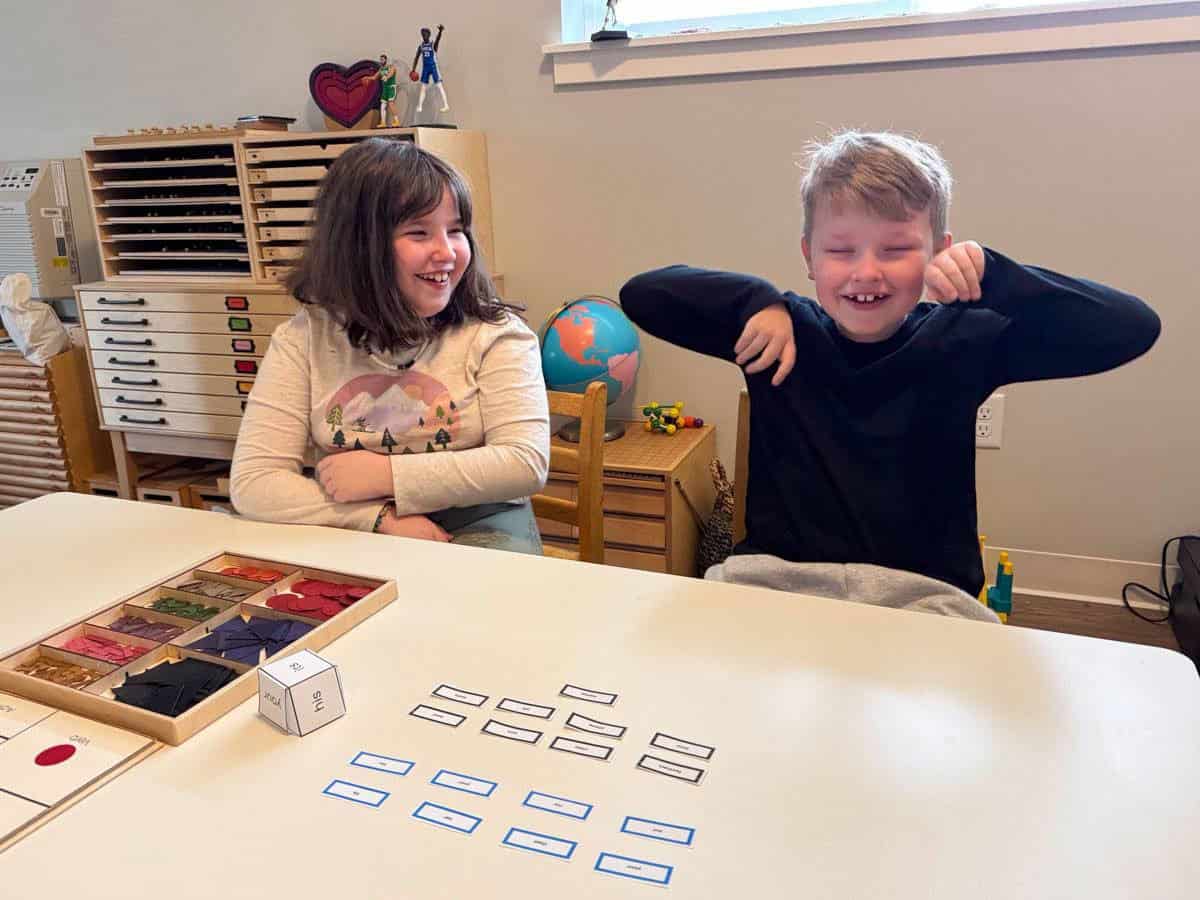
"What comes to mind when you hear the word possess?"
Instant laughter. "Demons."
"Ok, good. What do they possess?"
More laughter. "Your body."
"Yeah, or your soul, right?"
The possessive adjective answers the question, "Whose?" and comes before the noun.
Grab an object and add a possessive adjective.
"My remote control." "My mosasaurus."
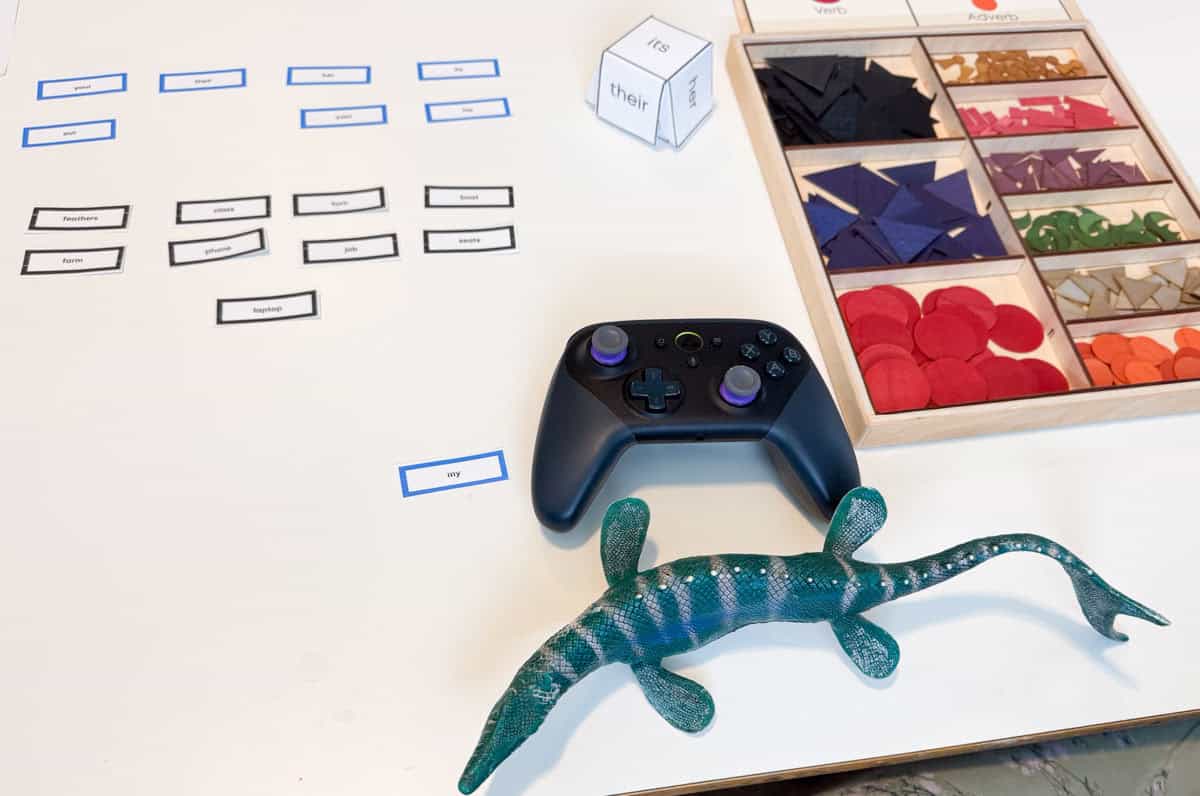
Complete the phrases using the possessive adjectives. Don't let contractions trip you up!
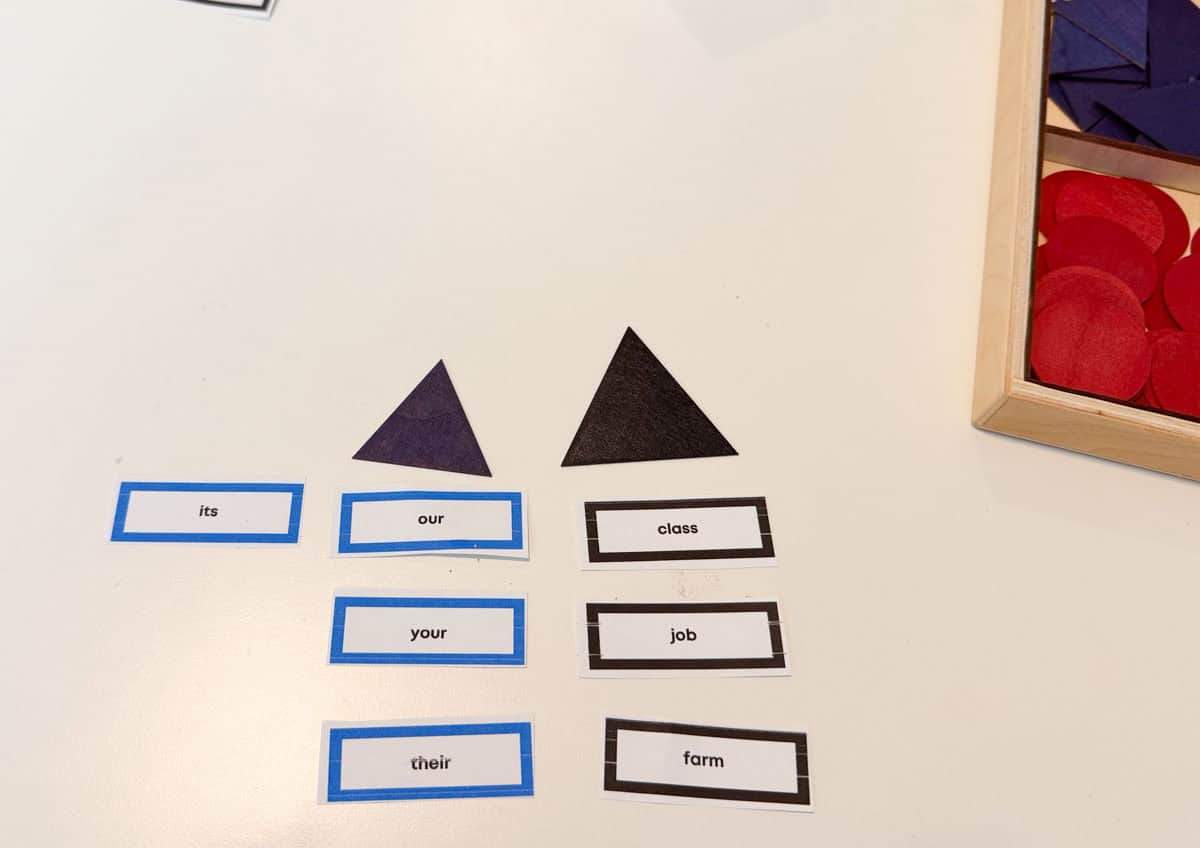
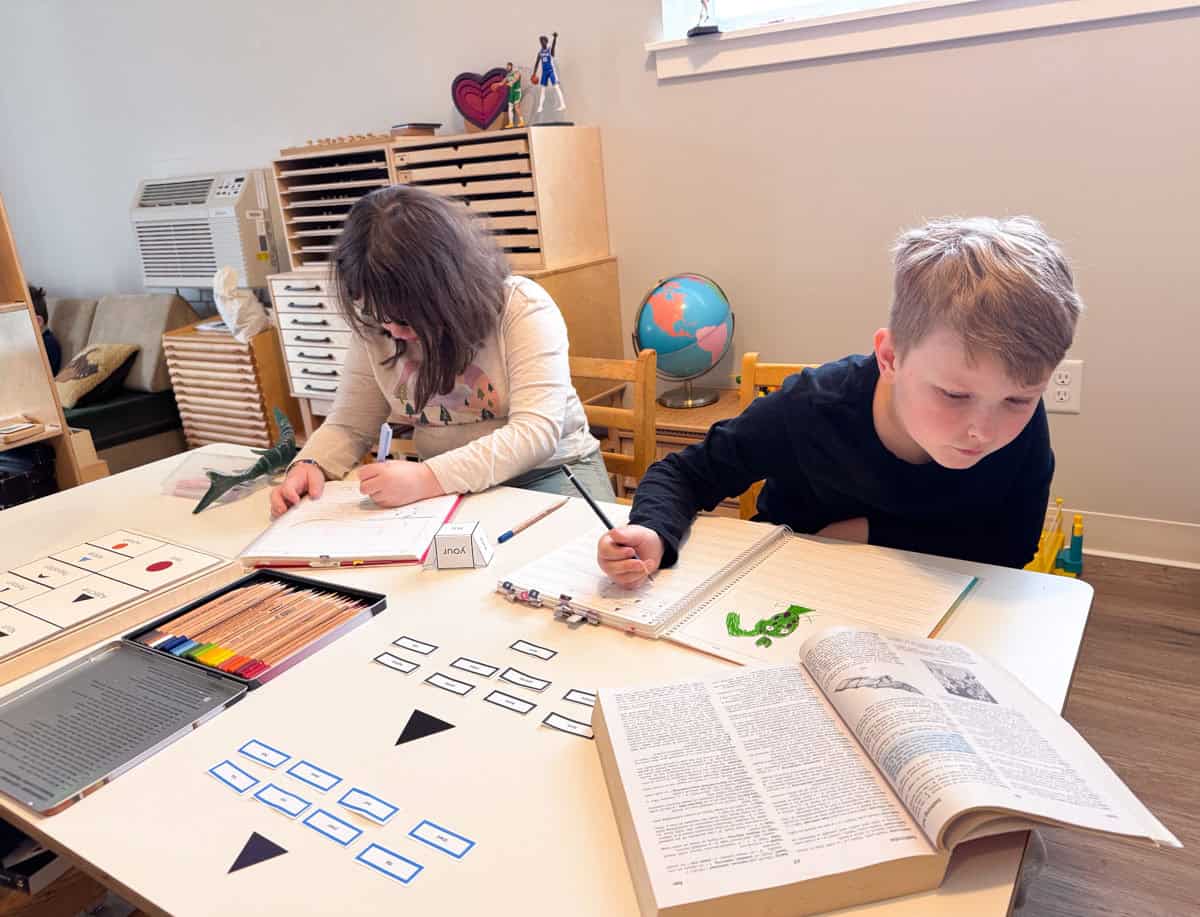
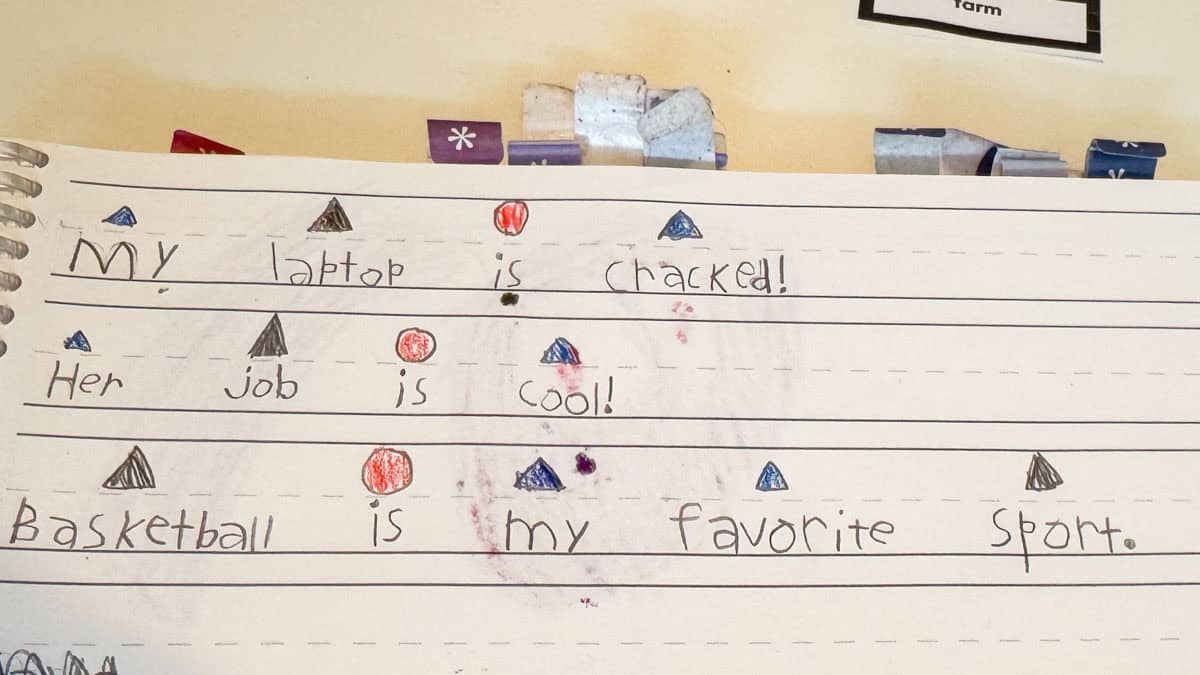
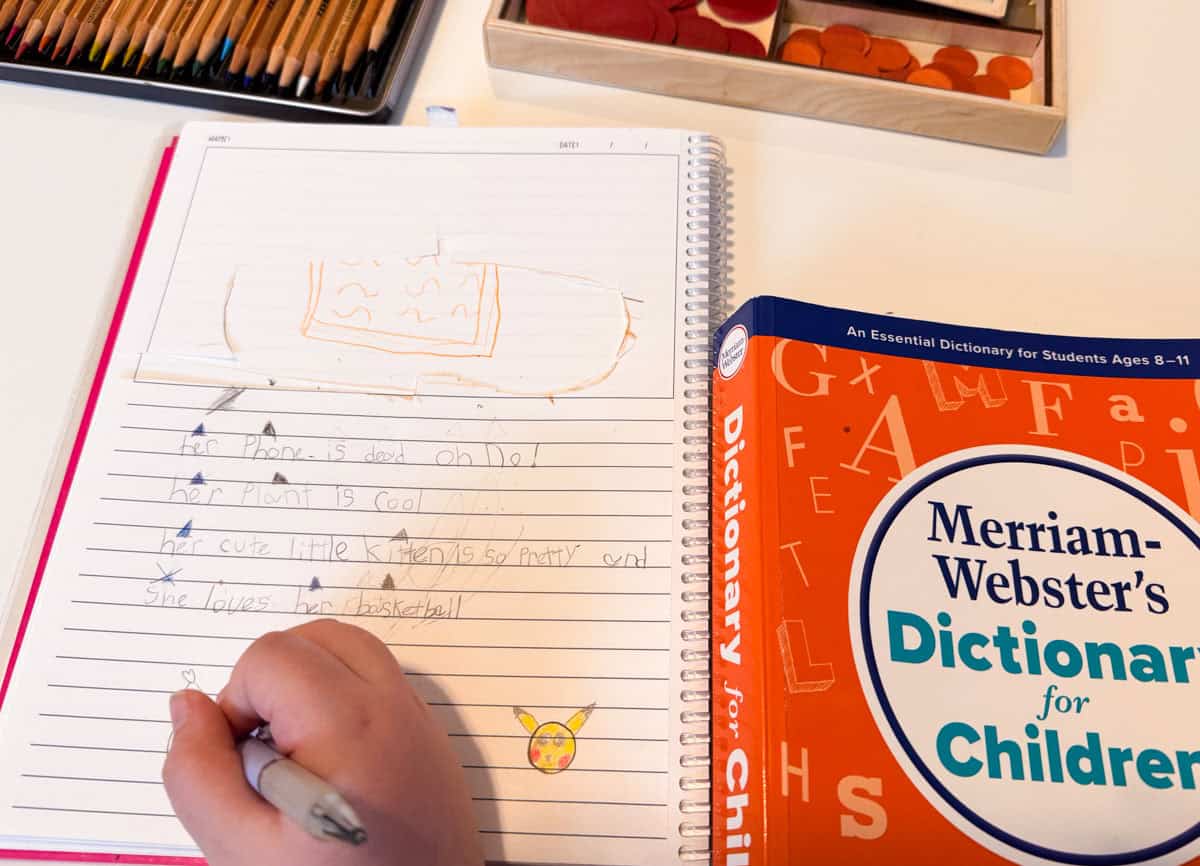
Kids can use grammar symbols to symbolize the entire sentence OR do the required part and go back to their true love: art!
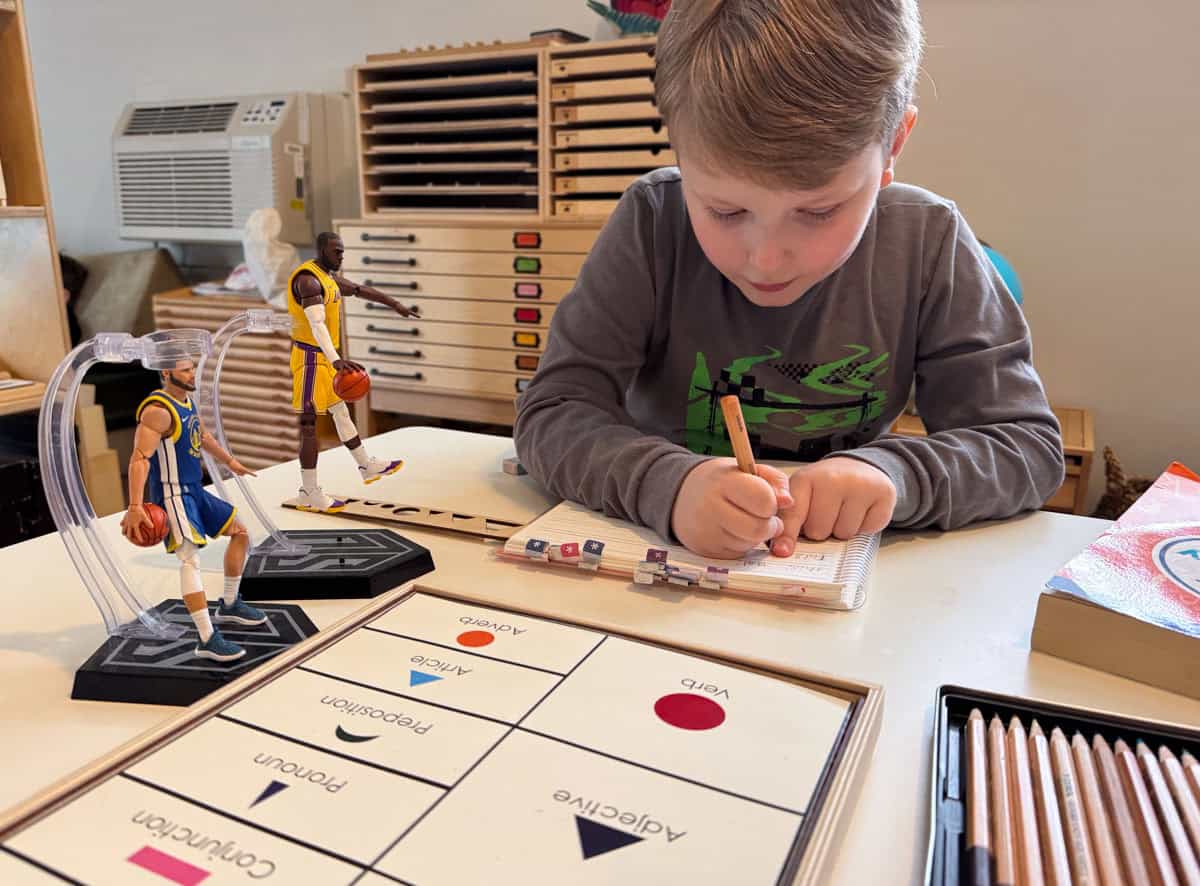
Demonstrative Adjectives
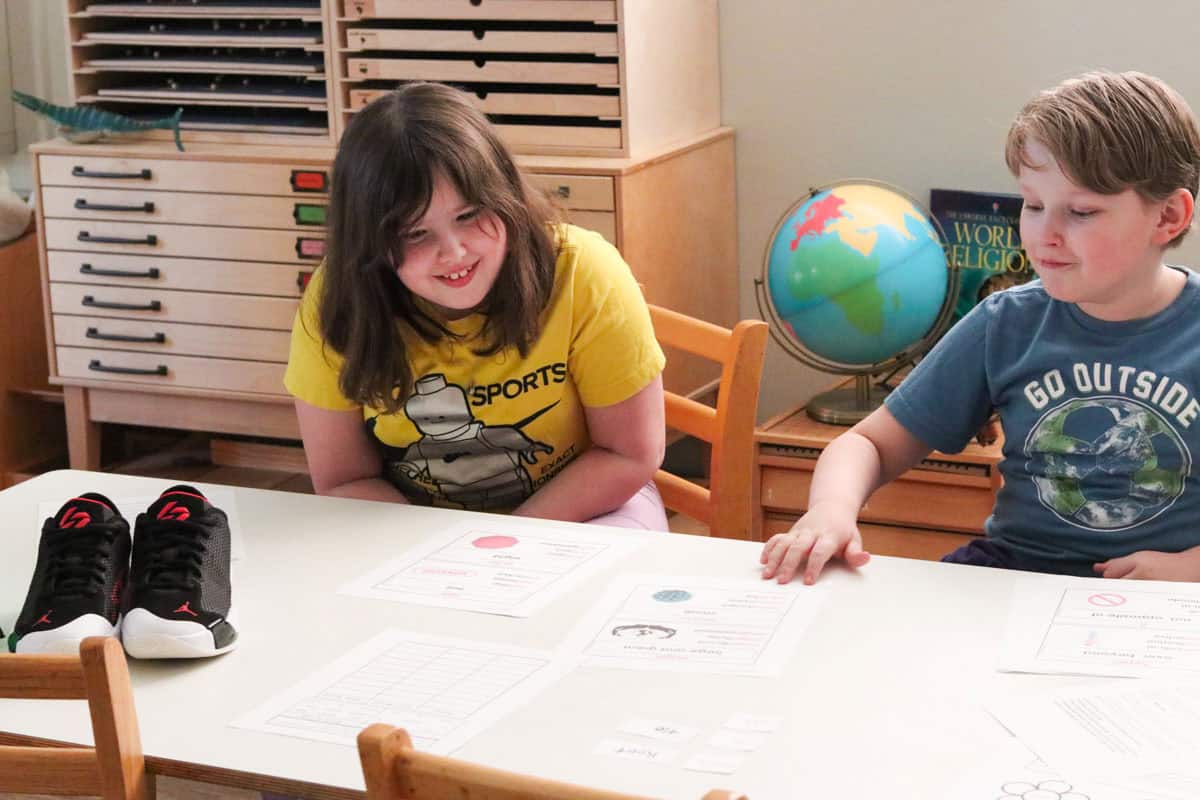
Can you guess what a Demonstrative Adjective does? The picture above contains a hint.
Here's another hint: look at the picture below. I assure you, this is a nonviolent lesson.
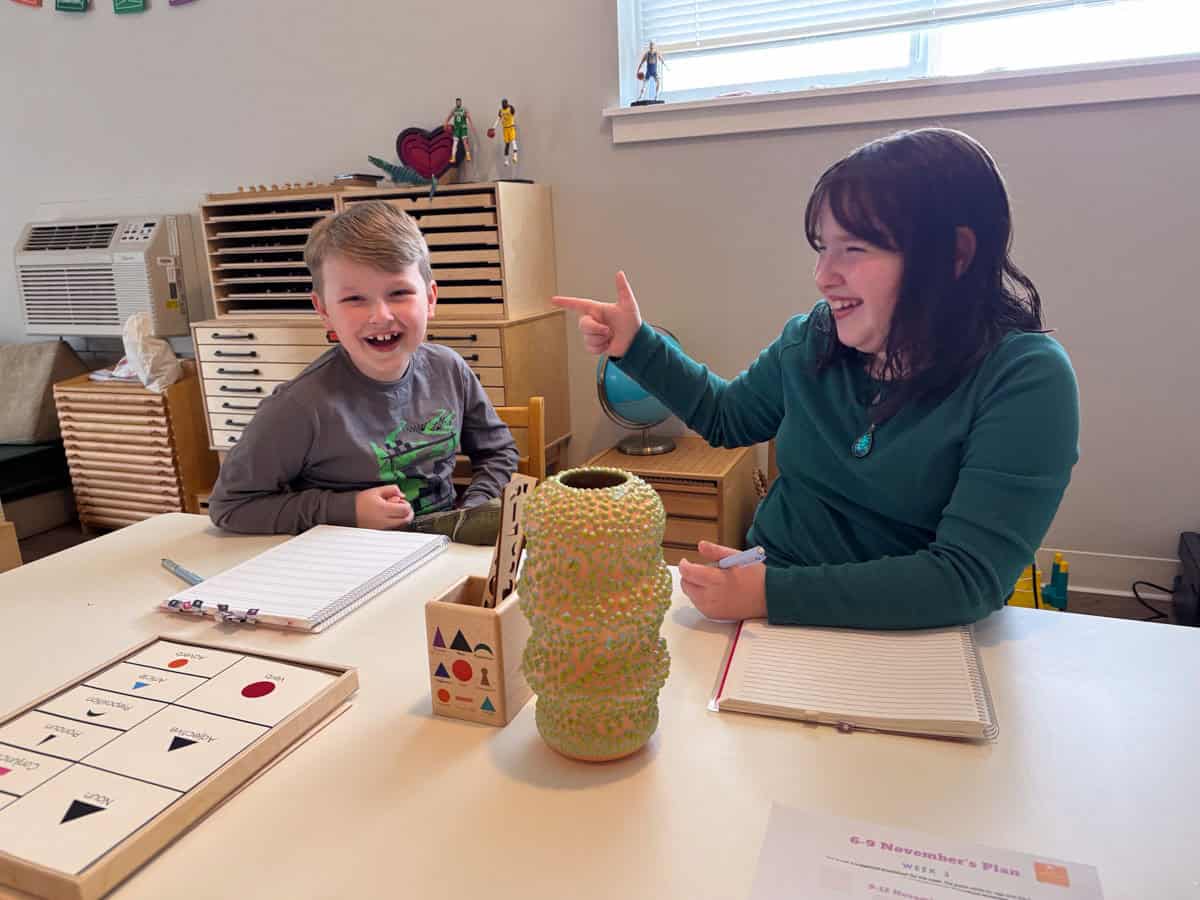
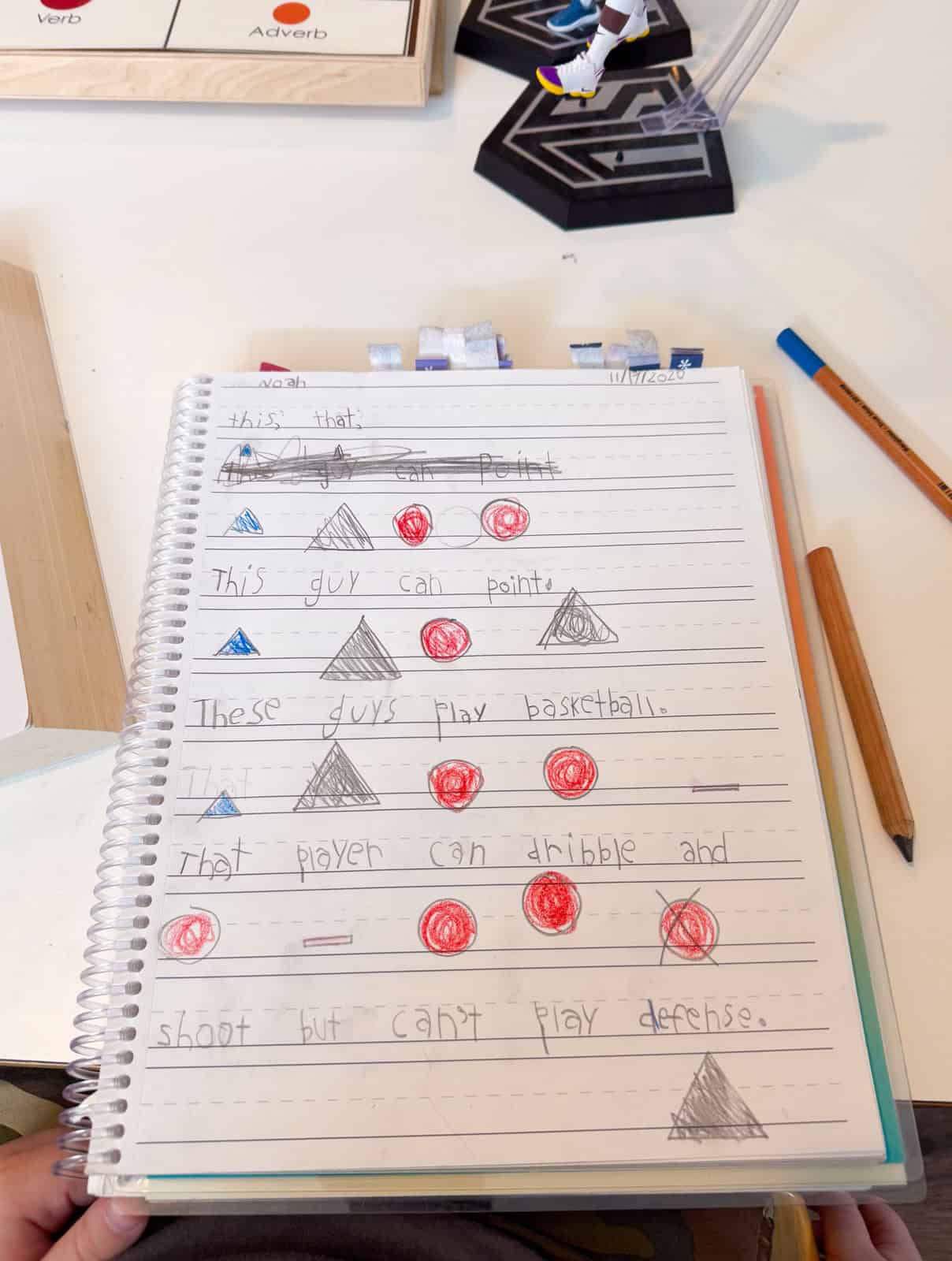
Demonstrative adjectives point things out. This & these (near) and that & those (far). They determine which specific person, place, or thing is being referred to.
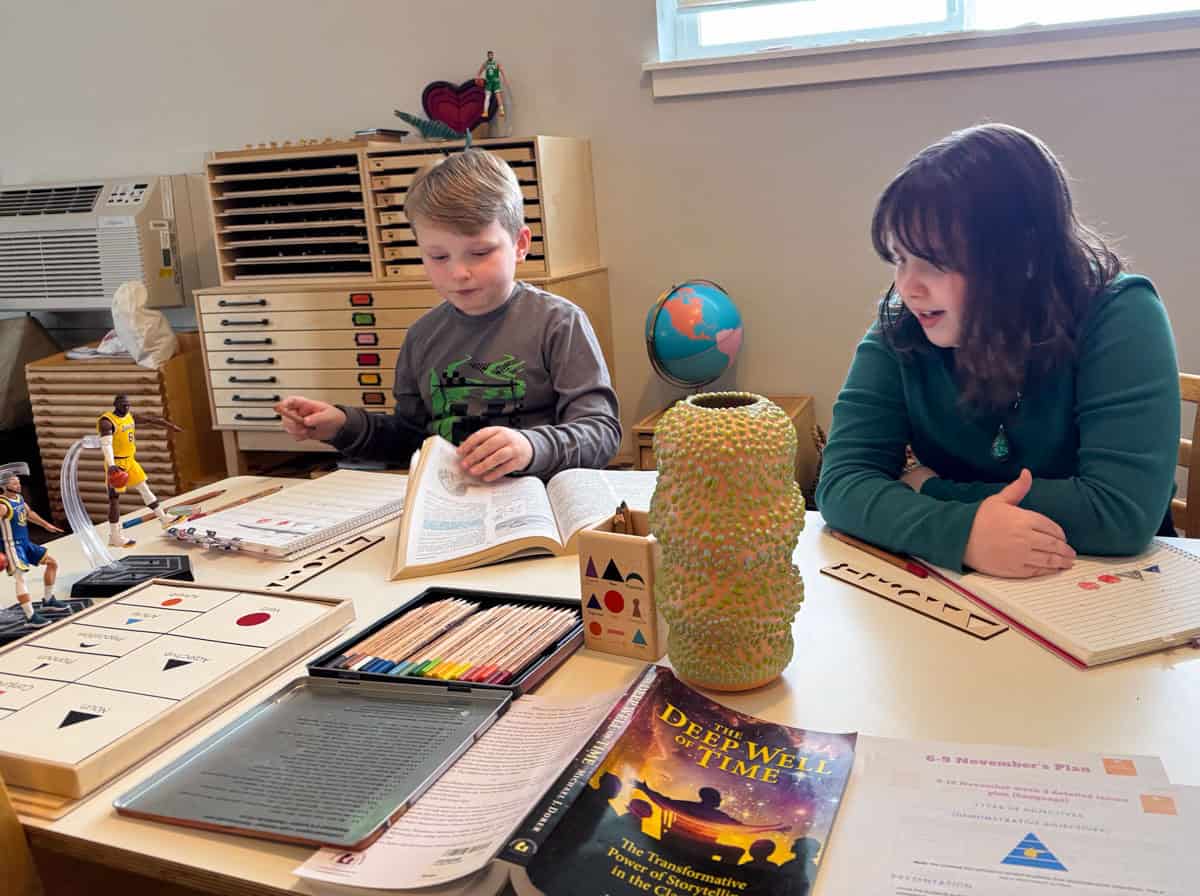
Can you think of a sentence that uses a demonstrative adjective? Don't forget your grammar symbols or stencil.
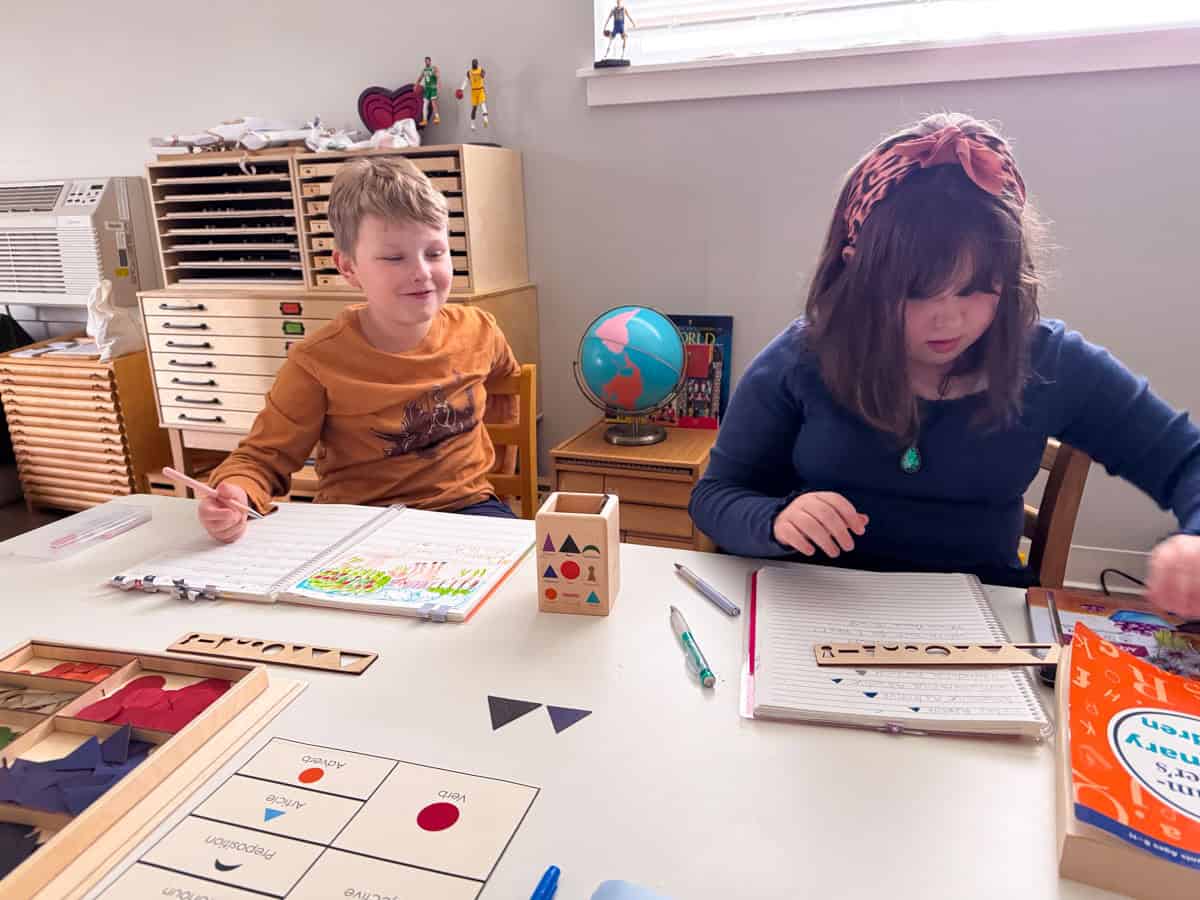
Interrogative Adjectives
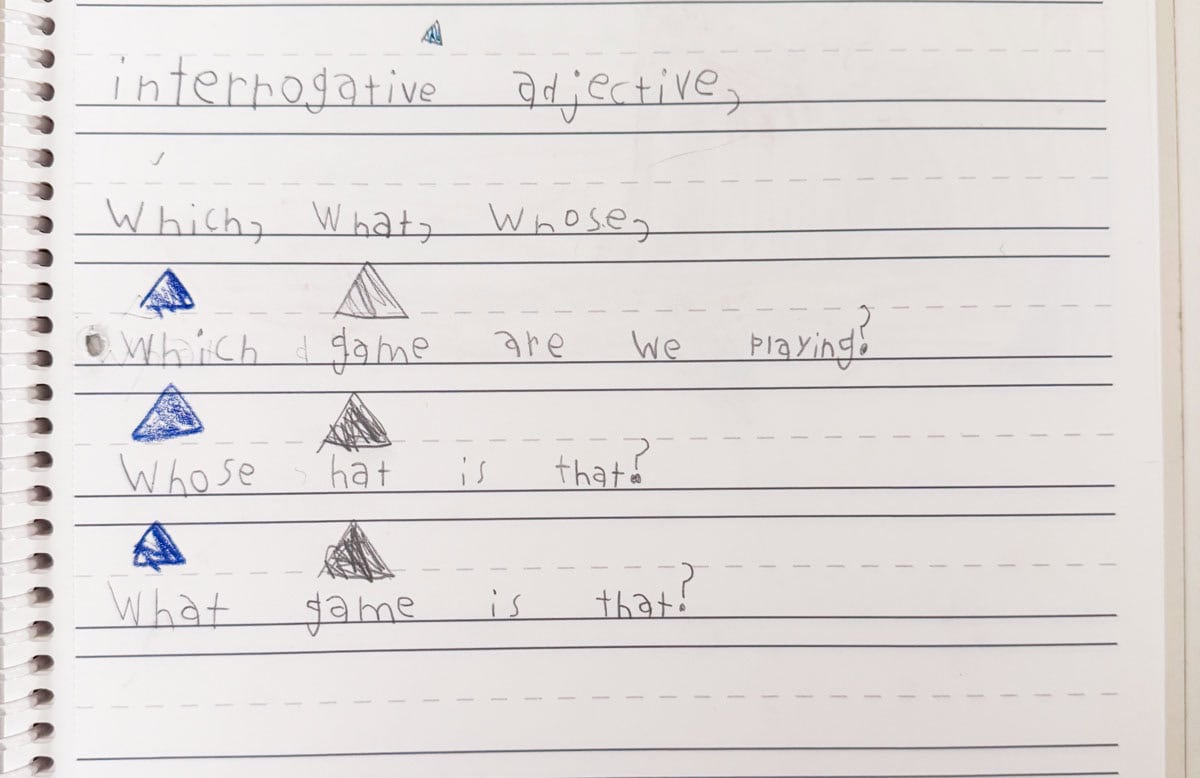
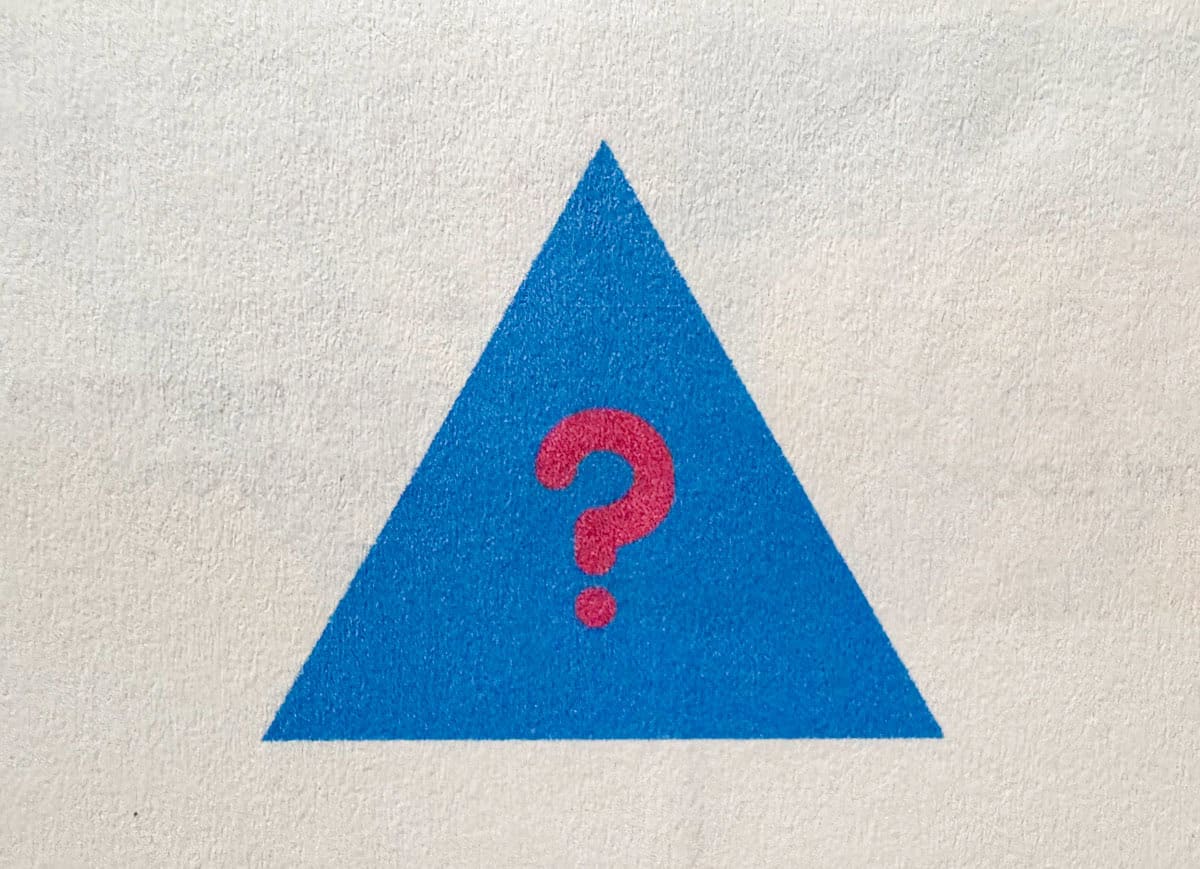
Kaia and Noah have decided that interrogative adjectives were named by one curious person, and that person can't spell. These adjectives do, however, describe a noun that is used in a question.
Conjunctions
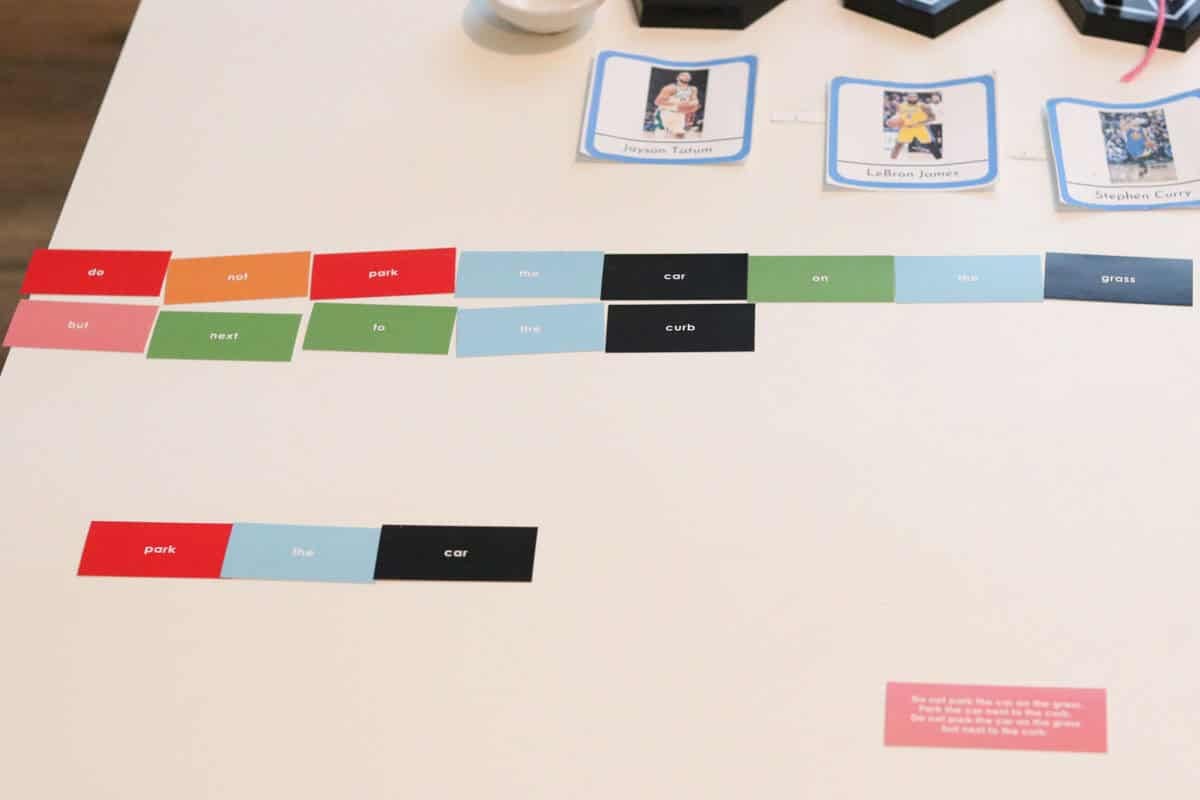
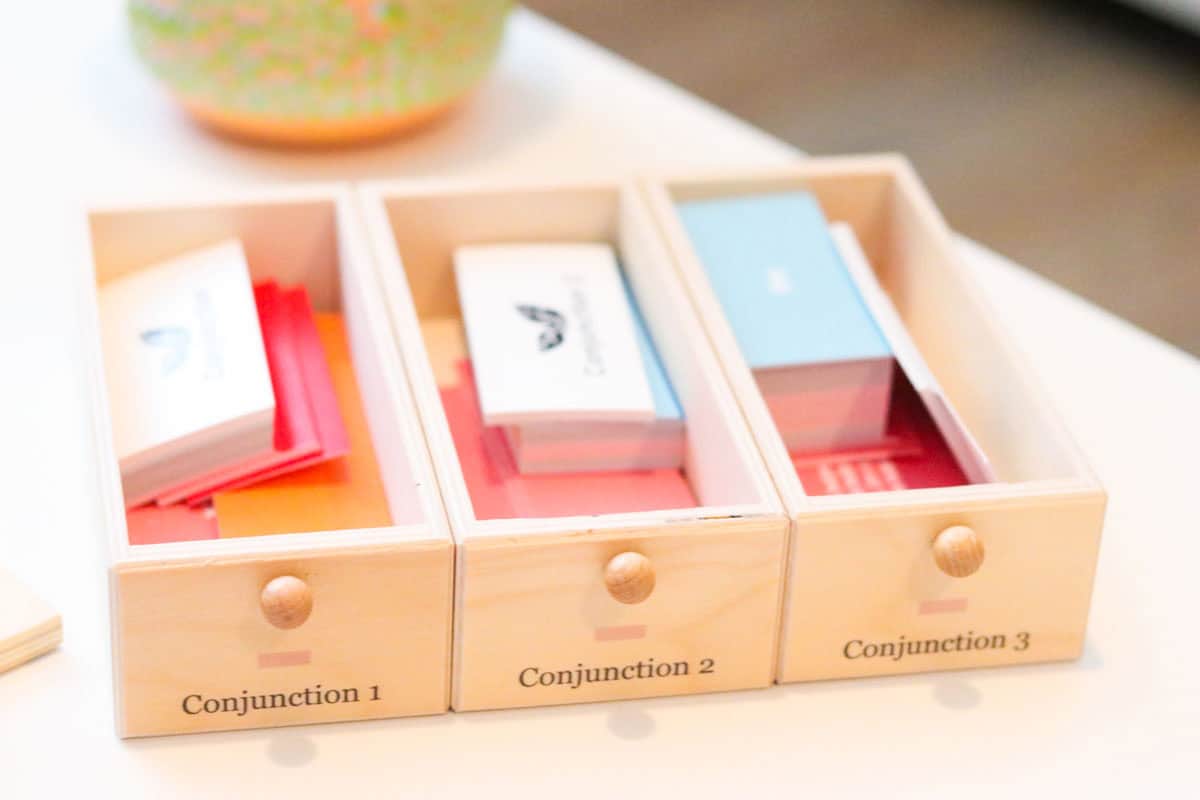
When introducing conjunctions & commas, grab your toys, something pink to tie them up, and labels.
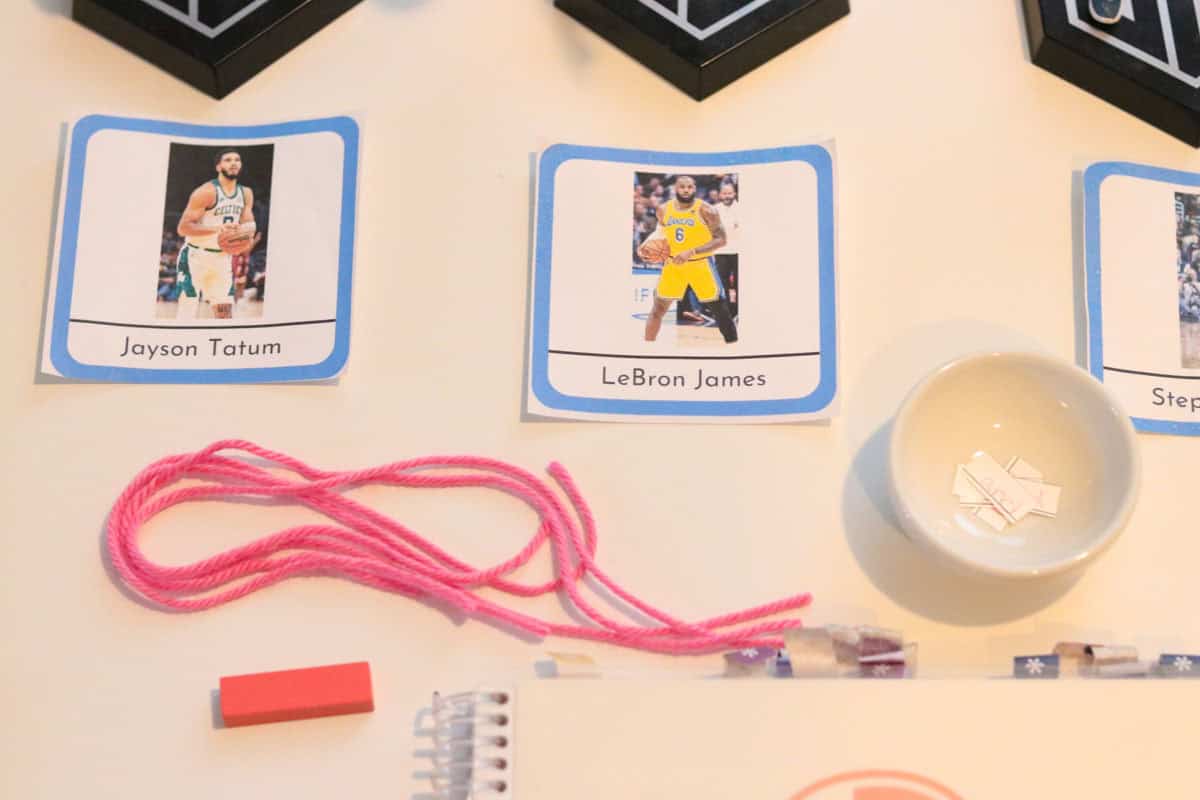
Tie the toys together, 1 by 1, and place between them a pink 'and' label.
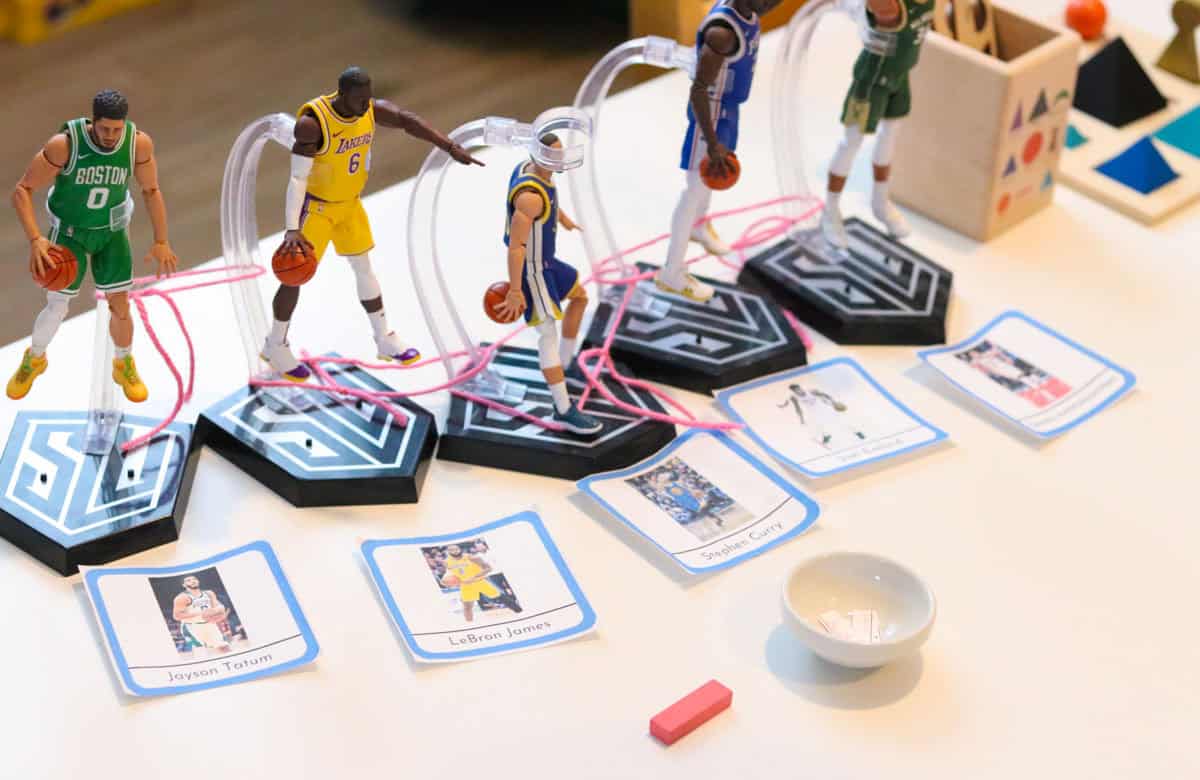
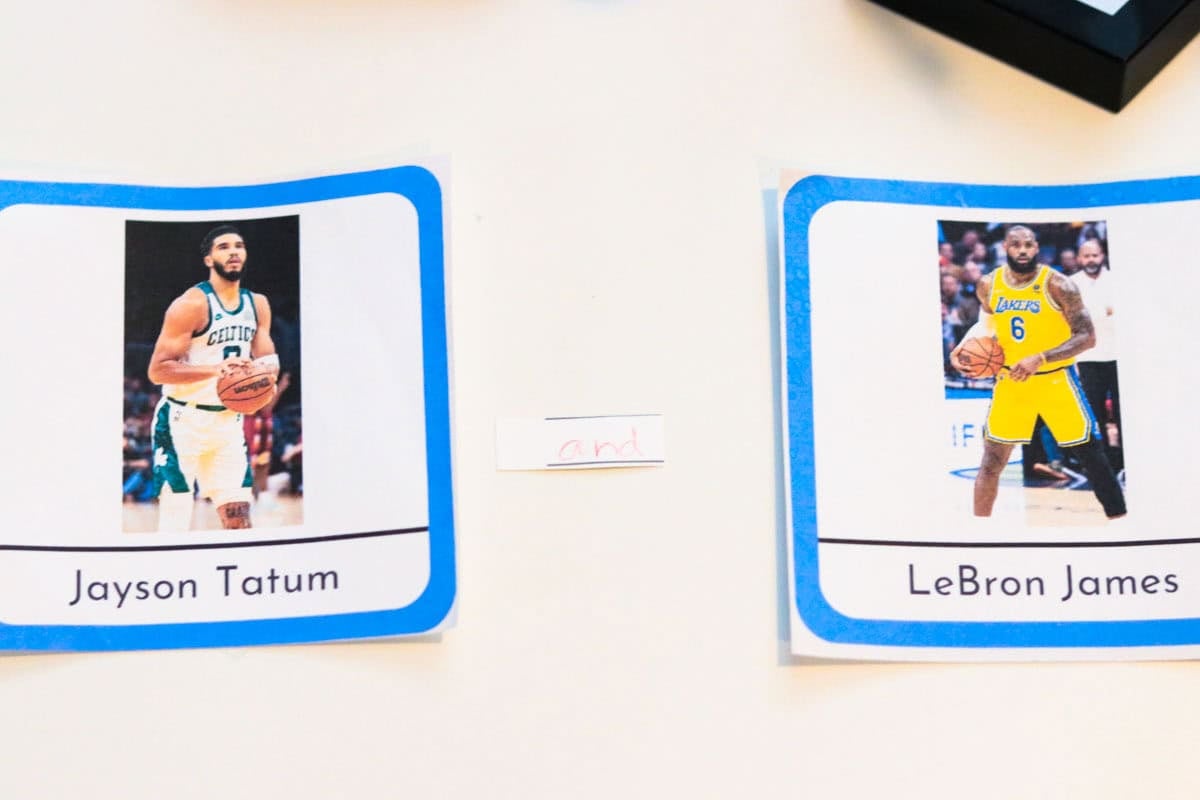
For more than 2 toys, flip that 'and' label over & it's now a comma label. All but the last one. He won't change.
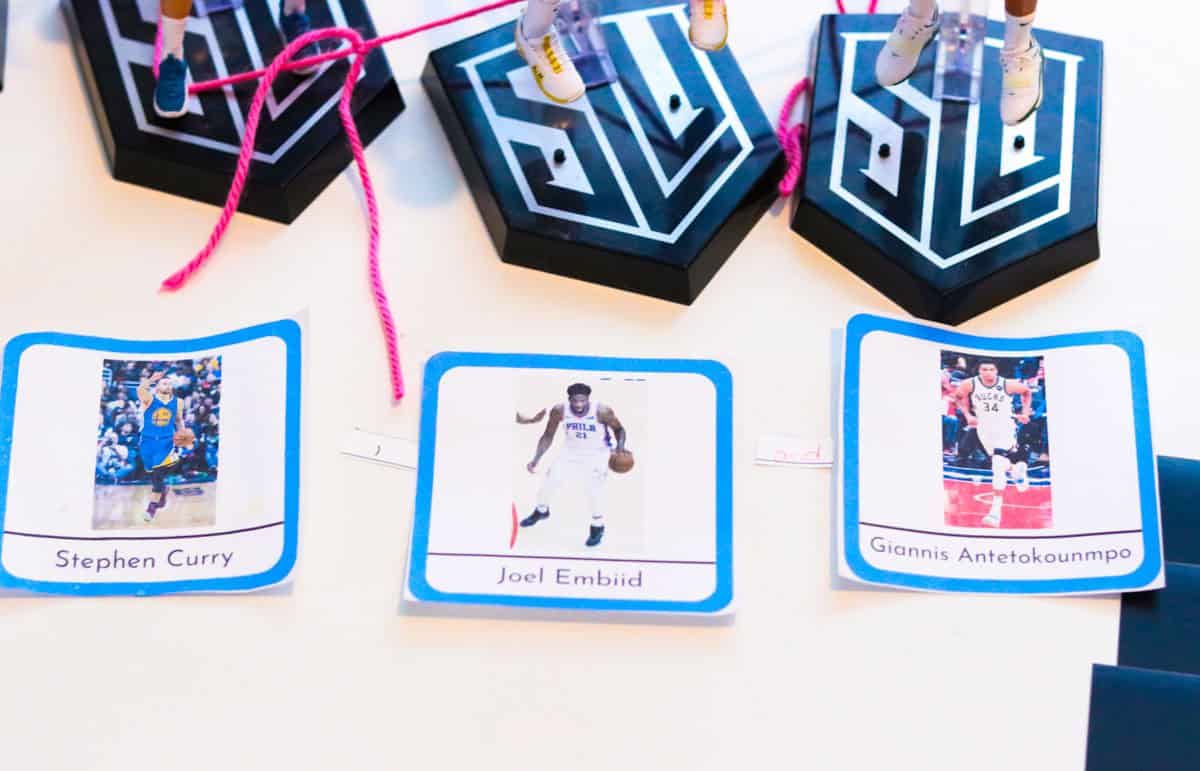
Follow up the lesson with activities that practice using conjunctions.
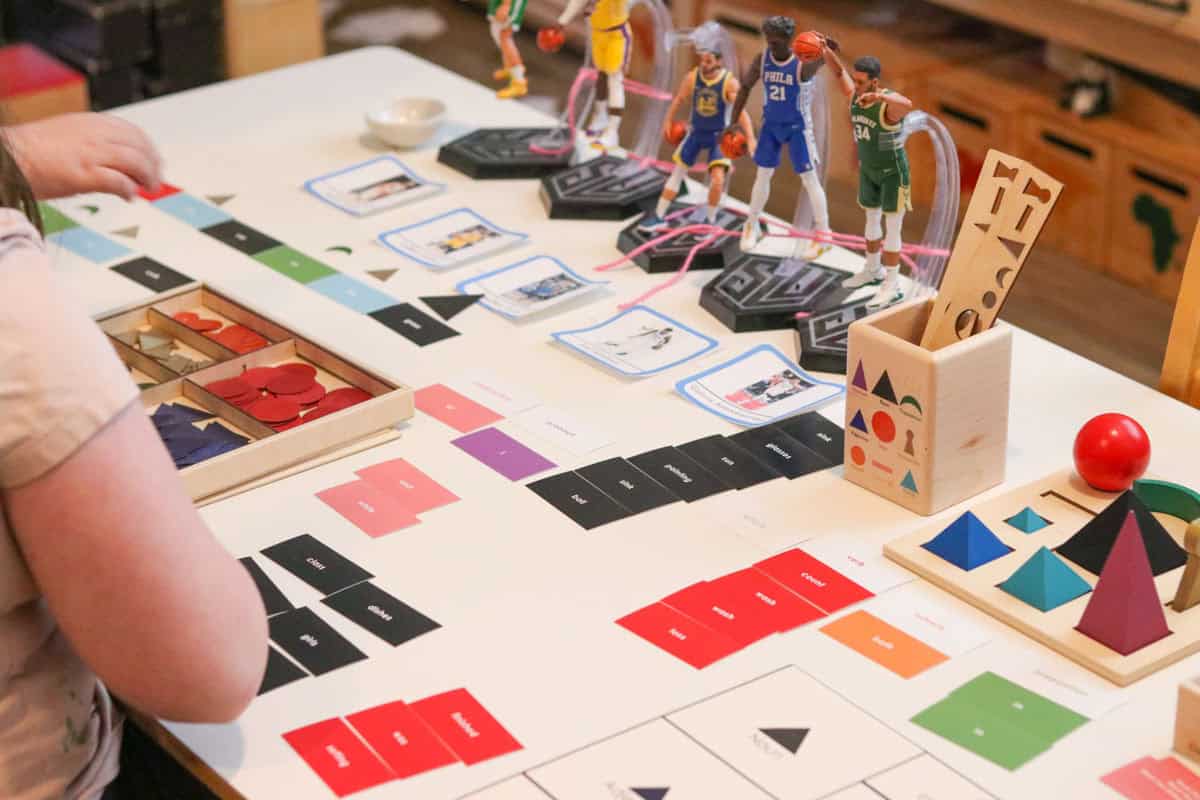
Prepositions
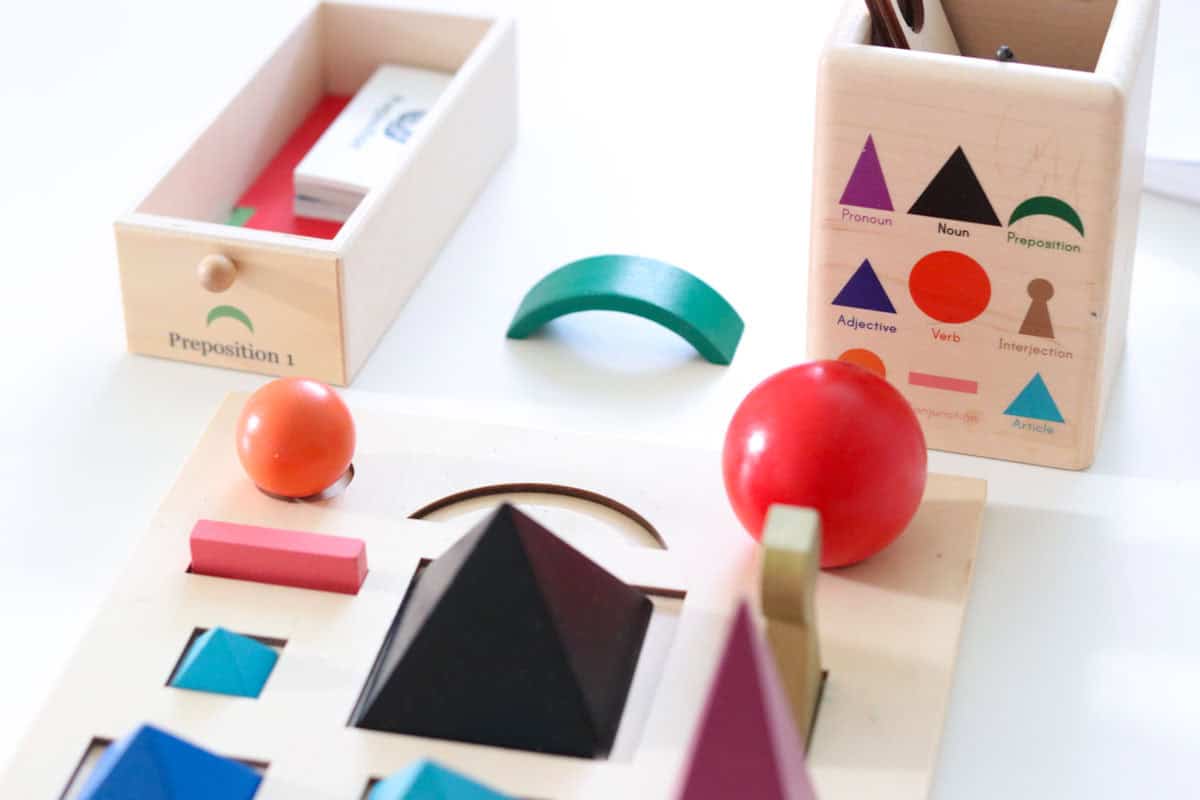
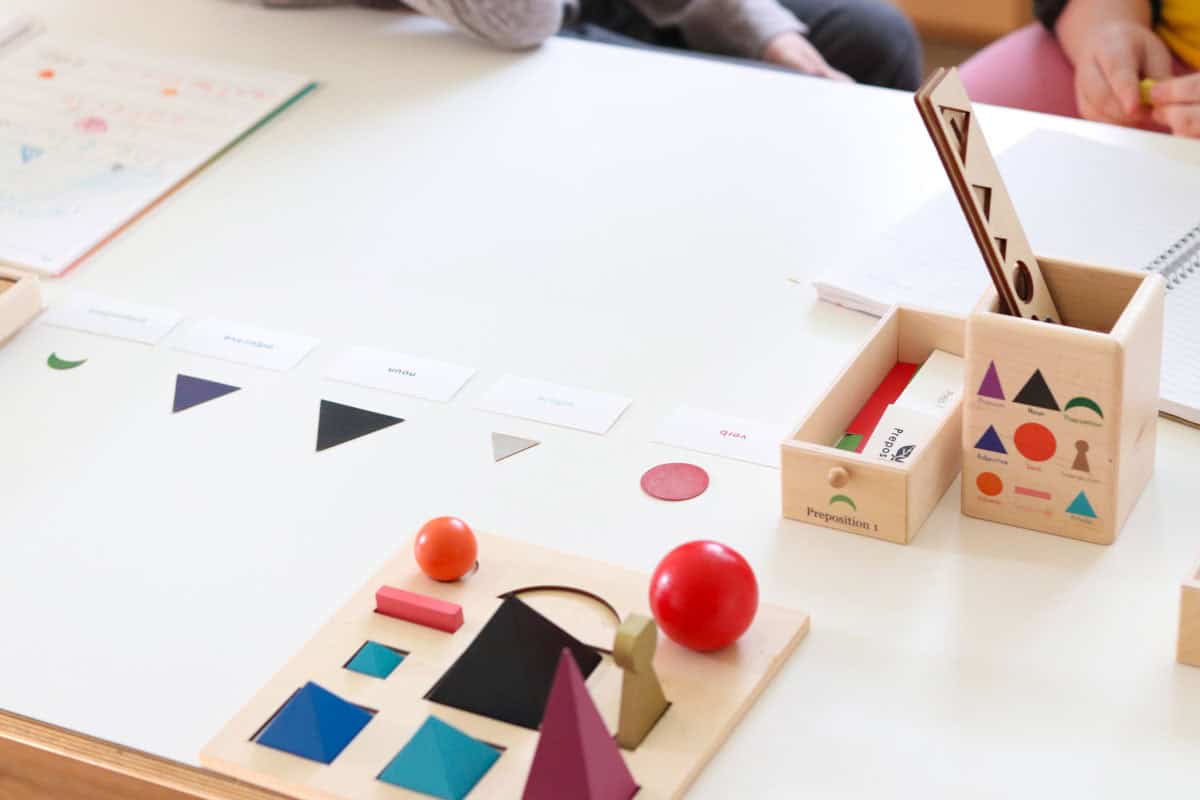
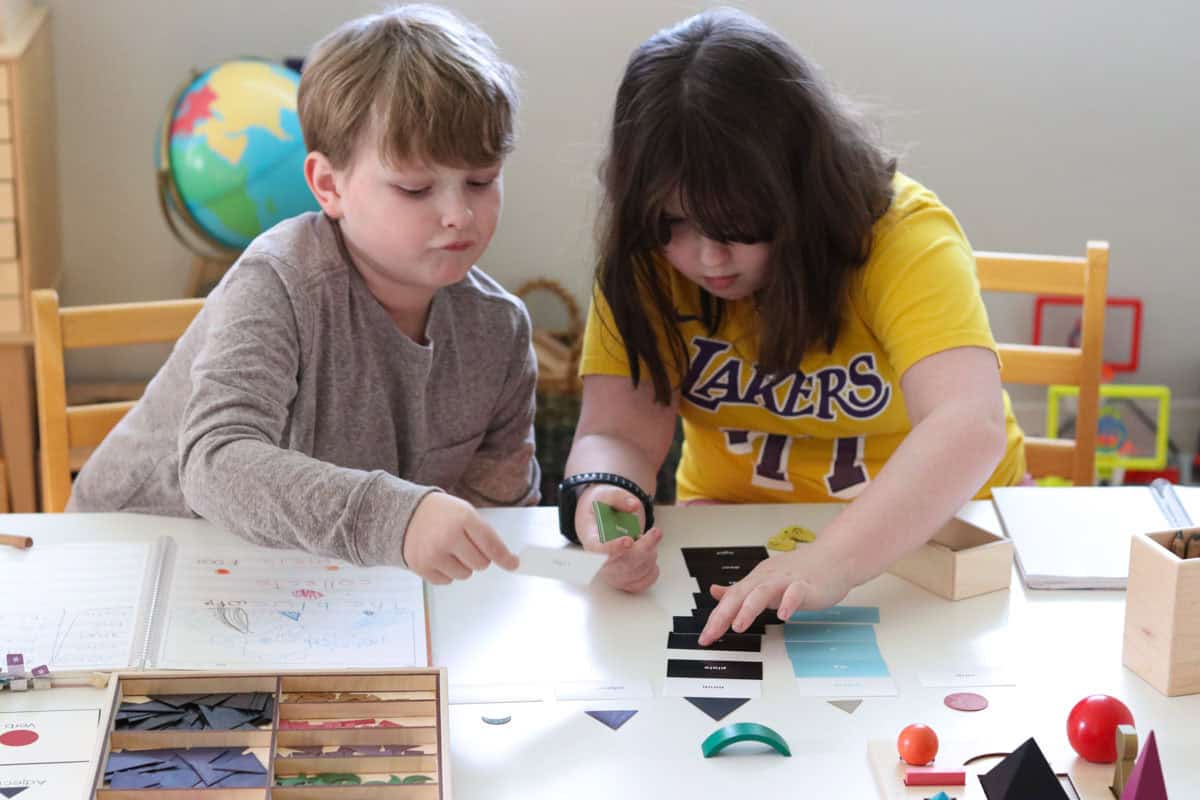
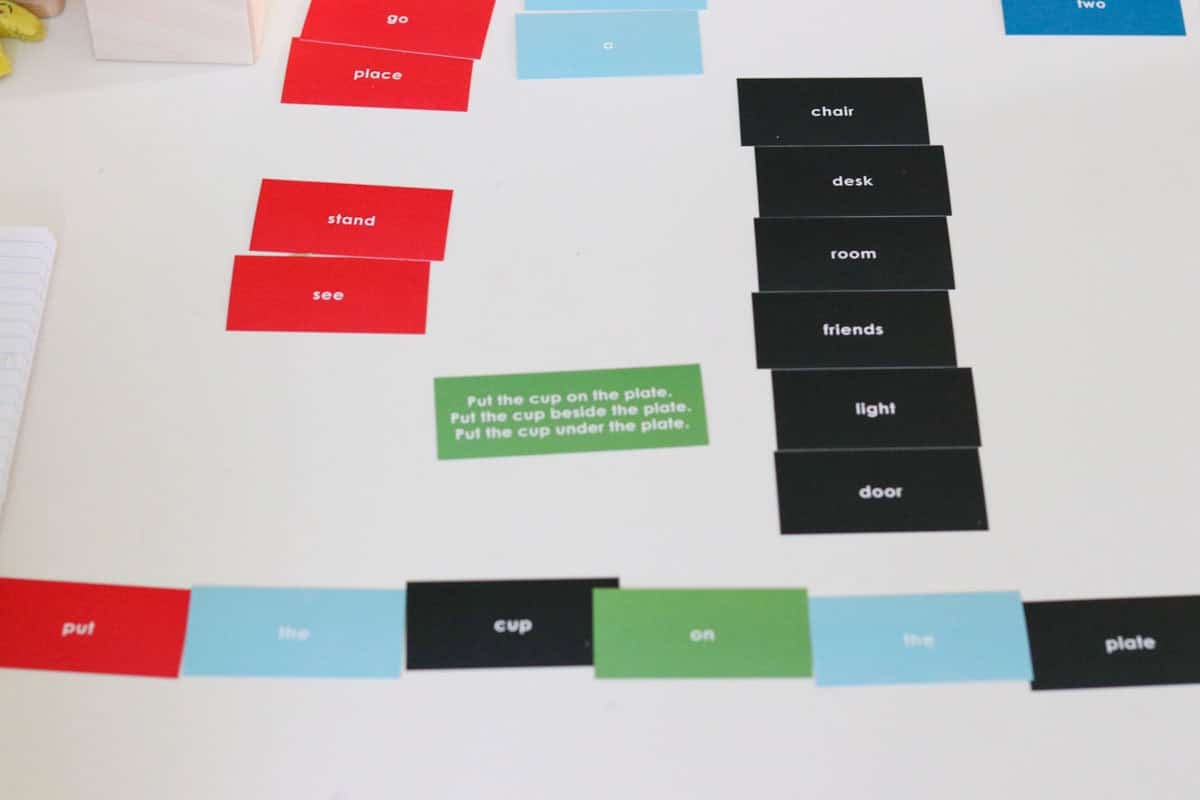
Prepositions describe the position of things, and changing the preposition lets you change your position. It's a bridge. Prepositions have a huge impact on the meaning of sentences.
For example:
The money is on the table.
The money is under the table.
I could keep going.
Homophones
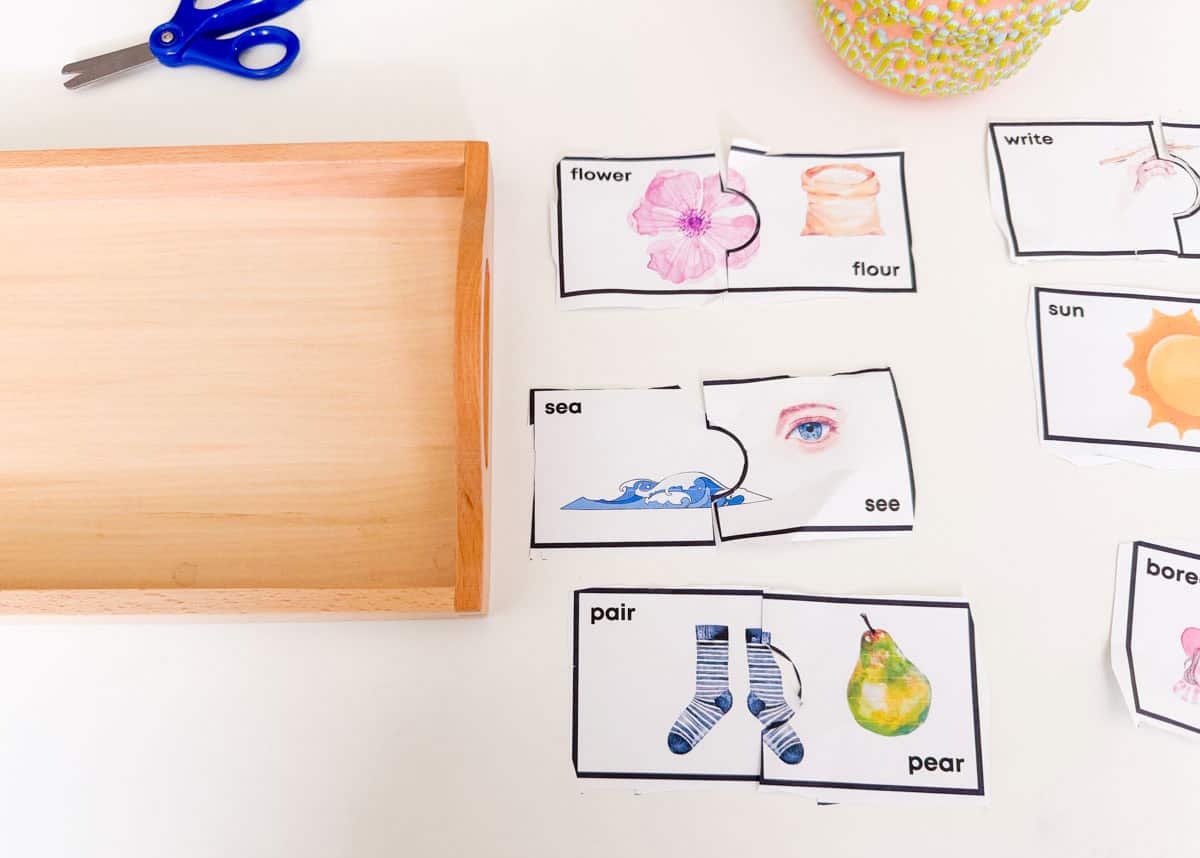
Our homophones work consists mostly of Montessori Tube Academy's printables. For learning about homophones, the kids listened to a reading of Dear Deer, a funny homophones picture book, and Kat worked on self-correcting puzzles from Montessori Tube Academy.
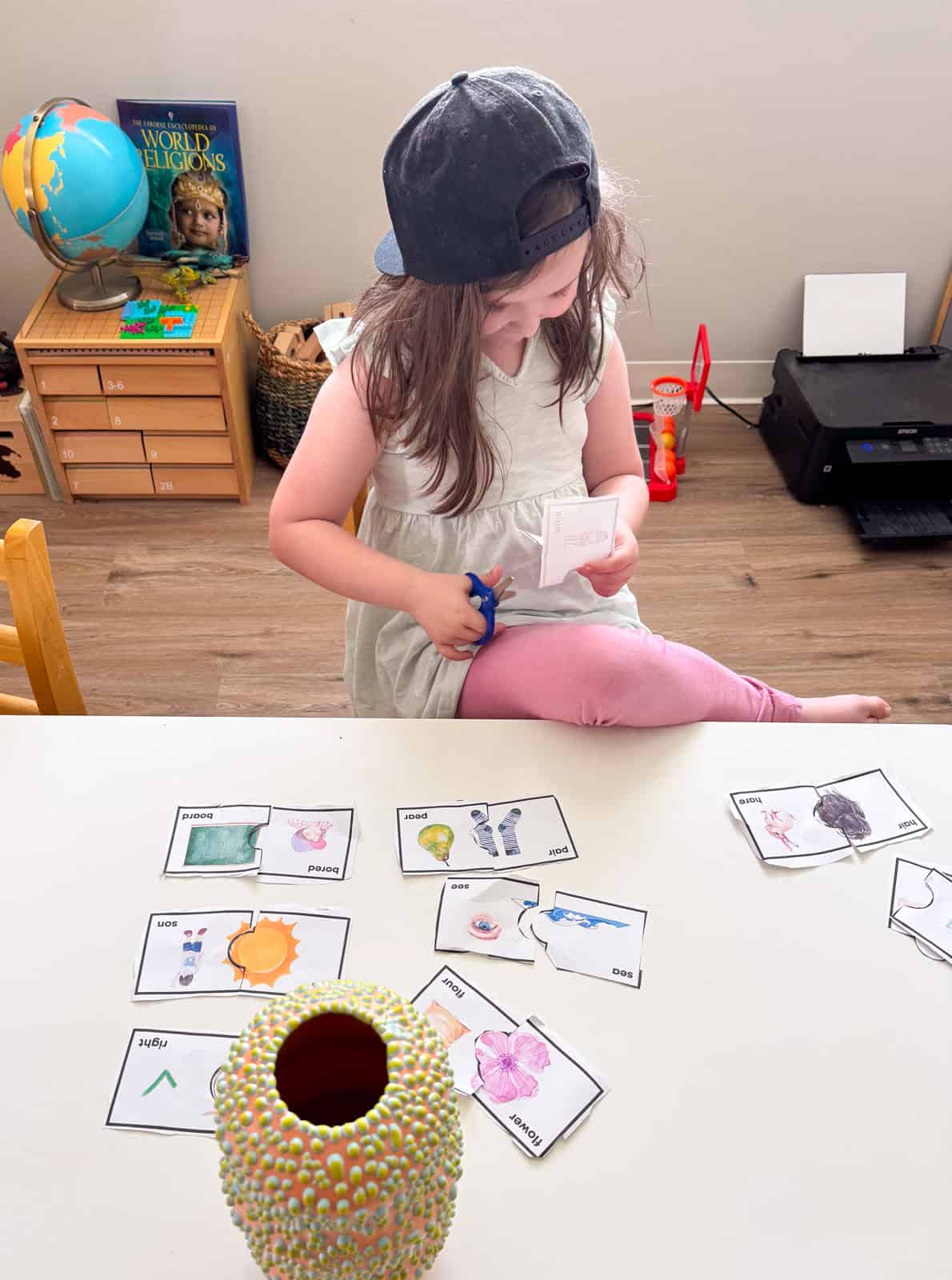
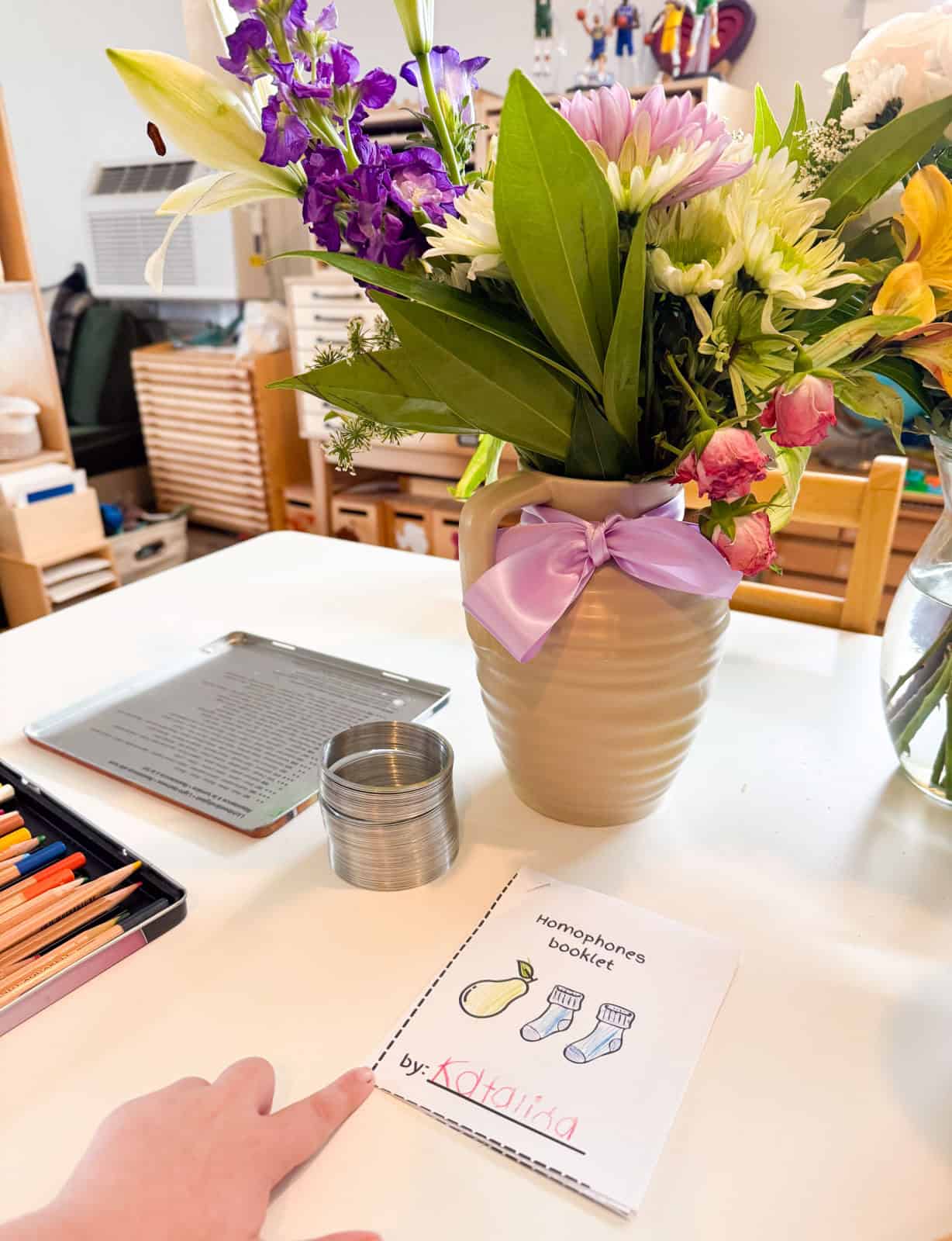
Kat also created a homophones booklet for art & handwriting.
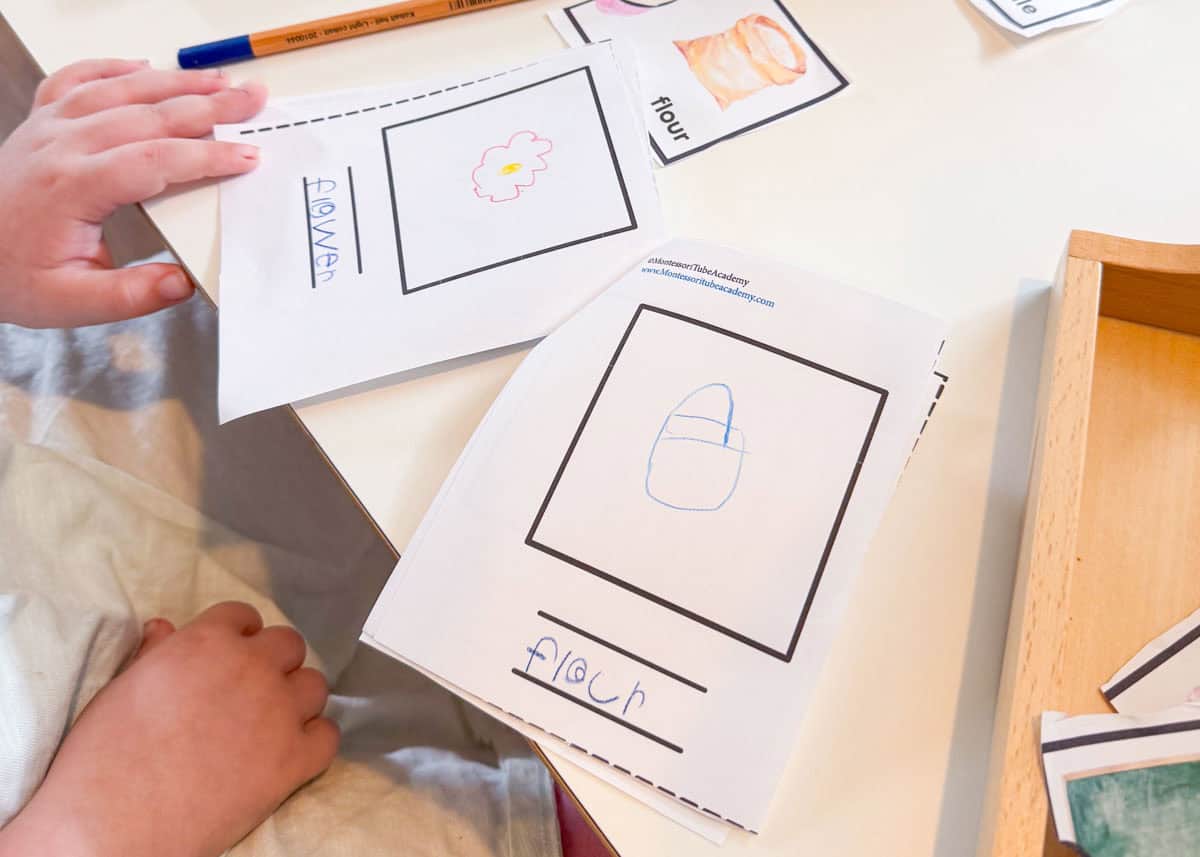
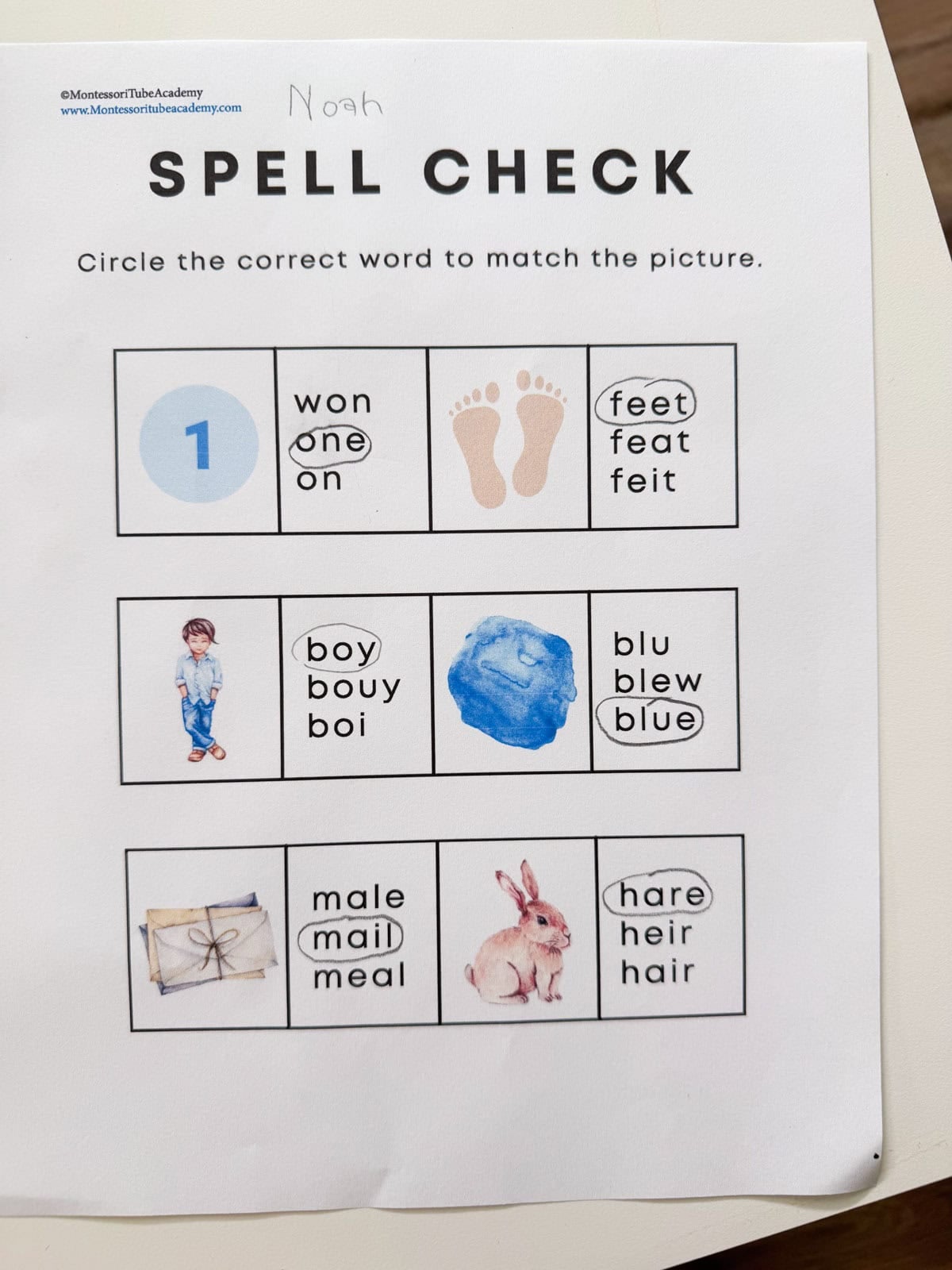
Montessori Tube Academy also offers homophones printables for elementary that include spelling practice and writing original sentences that contain homophones.
Montessori Elementary Grammar Lessons

Sample of elementary language lessons with Montessori Tube Academy
Materials
- Montessori Tube Academy Inclusive Club - Lessons & Printables
- Waseca Biomes Grammar Cards (optional)
- Waseca Biomes Grammar Symbols (optional)
- Waseca Biomes Grammar Stencil (optional)
Tools
Instructions
- Review the information for the sample lessons.
- Use materials from Montessori Tube Academy and/or supplemental materials.
- Try them with your student, making adjustments to fit their interests and needs.


Leave a Reply